

The first night I tried the Lumia Wellness cervical traction block, I almost gave up on it before the timer even hit five minutes. Flat on the kitchen floor with the back of my skull resting in that curved wedge, the sensation running down both sides of my neck felt less like relief and more like someone had reached in and started slowly cranking a bolt the wrong direction. I remember thinking, this is either doing something or I've made a mistake, and none of the five-star reviews I read before buying it warned me the first few sessions would feel like that.
I run a small auto shop, I'm in my fifties, and my neck has taken a beating from three decades of tilting my head up under vehicles. I'd already tried a chiropractor and one of those inflatable collar contraptions before I landed on this firm cervical traction block, and I went in expecting it to be more of the same, another gadget that promised a fix and delivered a shrug. What I got eventually worked, but the honest version of that story includes some rough patches nobody selling this thing bothers to mention. That's what this review is for.
The Quick Verdict
It works, but only if you push through an uncomfortable adjustment period and know when to back off. Don't expect comfort in week one, and don't expect a miracle either.
Amazon Check Today's Price →The honest truth about the first two weeks with this thing, and why I almost sent mine back
This isn't a soft, feel-good massage tool. It's a firm foam wedge that takes some getting used to before it starts paying off, and I'd rather you know that going in than find out the hard way like I did.
Amazon Check Today's Price on Amazon →How I've Used It, Warts and All
My first two weeks were a mess of trial and error I didn't plan on writing about, but here we are. I started by using it in the morning before my shift, figuring a stretch before a long day under trucks made more sense than one before bed. That was a mistake. My neck was already tight and cold from sleep, and cranking it into traction first thing left me stiffer for the first hour of work, not looser. It took switching to evenings, after a hot shower had already loosened things up, before the sessions stopped feeling like a fight I was losing.
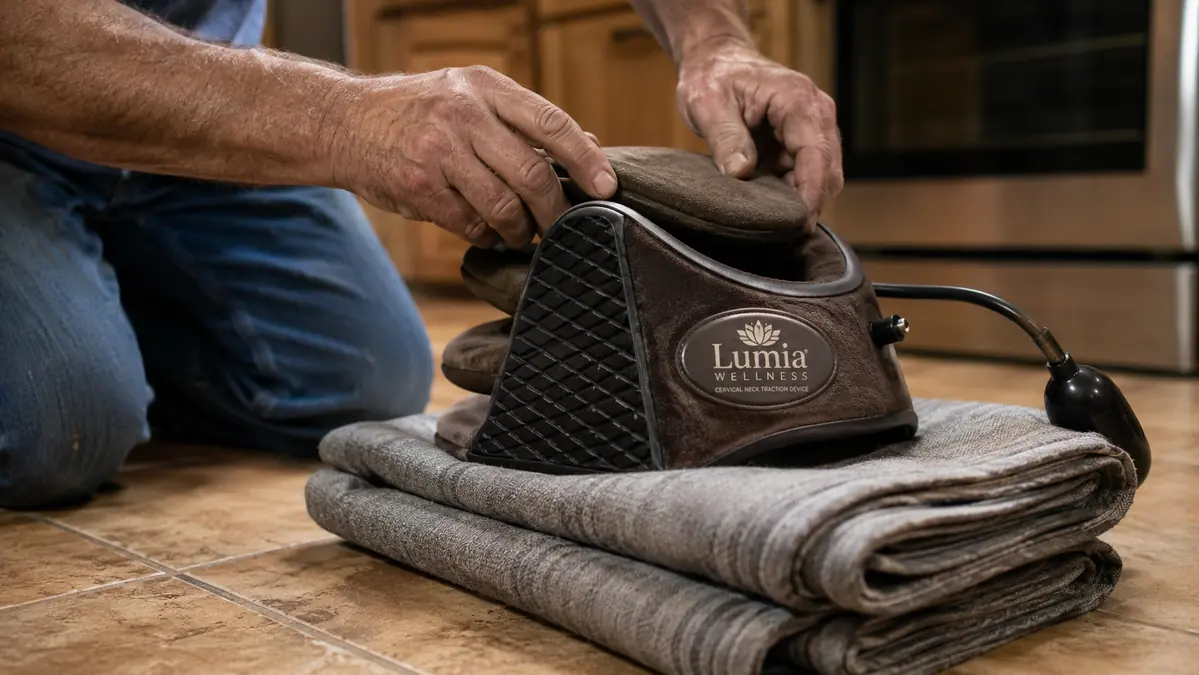
I also started on the kitchen floor because tile felt firm and stable, figuring a hard surface would help the wedge do its job. It didn't hurt exactly, but lying flat on tile with nothing under my shoulders meant I was tensing my whole upper back just to stay comfortable, which defeated the point of the exercise. I moved to a folded blanket over that same tile, just enough padding for my shoulders while my head still rested fully on the Lumia Wellness block itself, and that's when sessions started to feel like something was actually releasing instead of me just bracing against a cold floor.
I'll be straight with you, the first six or seven sessions felt strange in a way that's hard to explain if you haven't tried it. It's not painful exactly, but it isn't comfortable either, somewhere between a deep stretch and a mild ache that makes you want to sit up and shake it off. I almost quit twice that first week. What kept me going was reading up on how cervical traction is supposed to feel before it starts helping, that discomfort before relief is apparently normal and not automatically a sign something's wrong. I'm not a doctor and I'm not telling anyone to push through real pain, only that the specific odd sensation I felt those first sessions turned out to be part of the process for me, not a red flag.
It also took me a while to settle on session length. The insert card suggested ten minutes as a starting point, but I found the first two weeks were easier to stomach at six or seven minutes, working my way up gradually instead of forcing the full stretch from night one. Nobody tells you it's fine to shorten the session while you adjust, and I nearly assumed I was failing at something simple because I couldn't hit ten minutes right away. Once I stopped treating it like a test I had to pass on day one, the whole thing got a lot easier to stick with.
What Nobody Puts in the Product Photos
Every photo I saw before buying showed someone with their head tipped back looking peaceful, almost asleep. My reality for the first week was closer to gritted teeth and one eye cracked open checking the timer on my phone. That gap between the marketing image and the actual experience is exactly why I almost returned mine inside the first ten days. If you go in expecting the serene stock-photo version, the real thing is going to feel like it's broken or you're doing it wrong, when honestly it's probably just doing exactly what it's supposed to do.
Nobody mentions the smell either. Mine came out of the box with a faint chemical foam odor that took a good week of sitting out in the garage before it faded enough that I didn't notice it during a session. Not a dealbreaker, just another small thing the listing photos obviously can't tell you about.
The other thing that surprised me is how much the Lumia Wellness block wants to slide if you're not on a grippy surface. On bare tile it crept an inch or two during a session more than once, enough to throw my positioning off without me realizing it until I sat up and felt off-center. Once I had it on the folded blanket instead, that stopped being an issue, but it's the kind of detail you only learn by using the thing, not by reading the insert card.
The box itself shows a diagram of someone using the block on a bed with a pillow nearby, which is close to the opposite of what actually worked for me. A soft mattress let my shoulders sink unevenly, which twisted things slightly off-center without me noticing until my neck felt oddly one-sided the next morning. A firm, flat surface with just enough padding for the shoulders turned out to matter more than the packaging implies, and that's a detail I only figured out through a few uneven mornings, not through anything printed on the box.

When I Learned to Stop
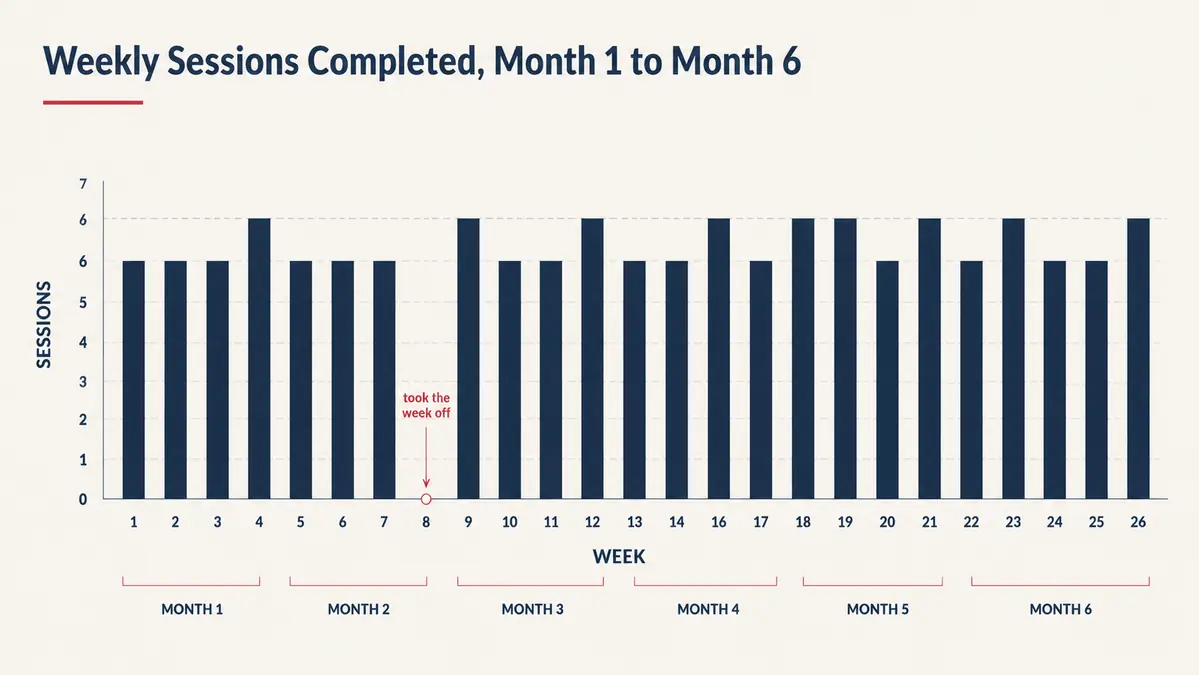
Around week nine, my husky Nova spotted a rabbit on our evening walk and hit the end of her leash hard enough to jerk my arm and my neck sideways in the same motion. Nothing dramatic, no trip to urgent care, but that night when I lay down for my usual session, the sensation was completely different from the deep-stretch discomfort I'd gotten used to. It was sharper, more localized on one side, and it didn't ease up the way it normally did after a minute or two.
I sat up, put the Lumia Wellness block away, and didn't touch it again for four days. Thirty years around torque wrenches and stress fractures in metal teaches you the difference between resistance that's supposed to be there and resistance that's telling you to stop before something gives. It took me longer to apply that same instinct to my own neck than I'd like to admit, but that leash jerk forced the lesson. I saw my doctor that week just to confirm nothing was seriously wrong, got the all-clear, and eased back into it slowly rather than jumping straight back to my old routine.
That week off is the one thing I wish every listing for this product mentioned somewhere. A firm traction wedge isn't dangerous to walk away from for a few days, and honestly, learning when to stop turned out to matter as much as learning how to start. If a session ever feels sharp, one-sided, or worse than when you lay down instead of better, that's your body telling you to put it away and check in with a doctor, not push through for the sake of a streak.
What This Realistically Won't Fix
I read enough Amazon reviews before buying that promised this thing would basically rebuild a neck from scratch, and I don't buy that kind of talk from a piece of foam that costs less than an oil change. What it actually does, in my experience, is take the edge off mechanical stiffness that builds up from posture and repetitive strain. It didn't diagnose anything for me, and it isn't going to diagnose anything for you either. If you don't already have a decent idea of why your neck hurts, a foam wedge isn't the place to start figuring that out.
It's also not fast. I've seen reviews claiming relief in a single session, and maybe that happens for some people, but for me the real change showed up gradually over weeks, not the first night or even the first week. If you buy this expecting the same kind of instant fix as popping a painkiller, you're going to be disappointed and probably toss it in a drawer before it gets the chance to actually help.
I also went in wary of the vague wellness language scattered across a lot of the online listings for products like this, words like clinically inspired or doctor recommended without any actual study or doctor attached to the claim. I'm not accusing anyone of lying, but I stopped putting weight on marketing language and started paying attention only to what I could track myself, night after night, in my own notes. That's the only kind of evidence I trust for a twenty-eight dollar piece of foam, and it's the only kind I'm offering you here.
What I Liked
- The rough first week is real but short, and knowing that going in makes it easier to push through
- Once you get the surface and padding right, it delivers a genuine, noticeable stretch
- Cheap enough that trying it isn't a big financial gamble
- No guesswork after the first couple weeks, the routine becomes automatic
- Doesn't require batteries, an app, or anything that can break down on you
Where It Falls Short
- The first several sessions feel genuinely odd and mildly uncomfortable, not relaxing
- The included instructions don't explain the difference between normal discomfort and a warning sign
- Surface and padding matter more than the packaging lets on, expect some trial and error
- Not something to use through an active flare-up, injury, or sharp pain
- Won't diagnose or explain what's actually wrong with your neck, only manages known mechanical stiffness
I've torqued enough bolts to know the difference between resistance that's supposed to be there and resistance that means stop. It took a jerked leash and four days off to teach me the same thing about my own neck.
Who This Is For
This is for someone who can tolerate an awkward, mildly uncomfortable break-in period without bailing after two nights, and who's willing to pay attention to their own body instead of just following a script. If your neck stiffness is the slow, mechanical kind that builds up from years of posture or repetitive strain, and you already have a general sense of what's causing it, this is a reasonable, low-cost thing to try. It rewards patience and a little bit of self-monitoring, not blind faith that the box will fix you.
It also helps to already have a support system in place, a doctor you can call if something feels off, a general idea of your own baseline stiffness, and enough patience to give it a few weeks before deciding whether it's working. I tracked mine loosely in the notes app on my phone, nothing fancy, just enough to notice patterns instead of relying on memory after a long shop day.
It's also worth saying this is a better fit for someone who's already comfortable troubleshooting on their own than someone who wants a fully guided program. There's no coach walking you through it, no video series, just a folded instruction card and your own judgment about surface, padding, and duration. That suited me fine, I spend my days figuring out problems with nothing but a manual and a flashlight, but I know that's not everyone's idea of a good time, and if you'd rather have your hand held through every step, set that expectation before you buy.
Who Should Skip It
If you've had a recent neck injury, whiplash, a fall, or anything acute, skip this until a doctor clears you. A guy at my shop cracked his jaw and neck last spring when a wrench slipped, and this is not the tool for that kind of fresh injury. It's a maintenance tool for chronic, known stiffness, and using it on top of an acute injury is asking for trouble instead of relief. Anyone with a diagnosed disc or spinal condition should have that conversation with their doctor before ever lying down on it, and anyone whose pain is sharp, sudden, or radiating down an arm needs a medical appointment, not a foam wedge from Amazon. If you're not sure which category you fall into, that uncertainty itself is a reason to ask a doctor first rather than guess.
Rough first week, real results after, here's the version nobody puts in the five-star reviews
I almost sent mine back twice. I'm glad I didn't, but I wanted someone to tell me the awkward part was normal before I nearly quit. Consider this that heads-up.
Amazon Check Today's Price on Amazon →