
I've spent better than thirty years with my head tilted back under a truck or bent down over an engine bay. By the time I hit fifty, my neck felt like it belonged to somebody twenty years older. Some mornings I couldn't check my blind spot without turning my whole shoulders with it. My late wife used to tell me to see somebody about it. I finally did something simpler first: I started using a cervical traction block, the Lumia Wellness one, ten minutes a night on the bedroom floor.
I'm not a physical therapist and I'm not going to pretend this thing fixed thirty years of looking up at exhaust manifolds. But it did something a heating pad and a bottle of ibuprofen never managed. Here are the ten reasons it actually helped, in plain terms, no fluff.
The Tool That Finally Got My Head Turning Again
No appointments, no waiting room, no stranger's thumbs digging into your neck. Just ten minutes flat on your back with a firm block doing the work gravity's been fighting you on for years.
Amazon Check Today's Price on Amazon →It lets gravity do the work instead of your muscles fighting it
Every day your neck muscles are working overtime just holding your head up, especially if you spend hours looking down at an engine, a phone, or a welding table. Lying back on the block takes that job away from them for a few minutes. The weight of your head does the stretching instead of your neck straining against it. That's the whole trick, and it's why it works better lying down than any stretch you'd do standing up in the garage.
It opens up space between the vertebrae that gets squeezed shut
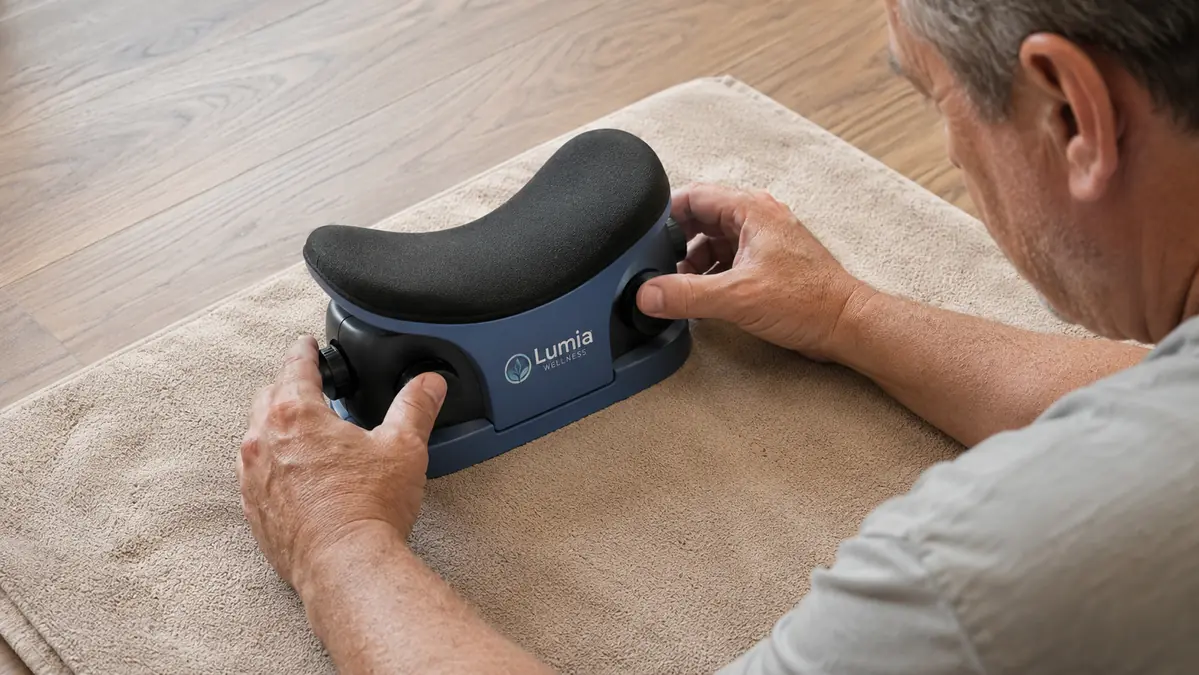
Years of looking down compress the discs in your neck closer together than they should be. That compression is a big part of why turning your head feels stiff and grinding instead of smooth. The Lumia Wellness block gently pulls the base of your skull away from your shoulders, giving those compressed discs a little breathing room. I felt an actual pop of relief the first week, not painful, just space opening up that hadn't been there in years.
It relaxes the muscles that lock up to protect an injury
When you strain your neck, the muscles around it tighten on purpose, like a splint your body builds itself. Problem is, that splint doesn't know when to let go. Mine stayed locked for years after an old fall off a lift. Sustained gentle traction tells those guarding muscles they can stand down. It's not instant, but after a couple weeks the guy in the mirror wasn't hunching his shoulders up toward his ears anymore without noticing.
The firm shape holds a consistent angle so you're not guessing
I tried a rolled-up towel first. It shifted every time I breathed. The molded firm shape on this Lumia Wellness block holds the same angle the whole session, which matters more than people think. Inconsistent pressure just aggravates a stiff neck. A block that doesn't move lets your muscles actually trust the position instead of tensing up to correct it every few seconds.
Ten minutes fits into a real workday, unlike a therapy appointment
I run a shop. I don't have two free hours to drive across town, sit in a waiting room, then drive back. Ten minutes flat on the bedroom floor before bed is something I can actually keep doing week after week. The best recovery tool isn't the one that works best on paper, it's the one you'll still be using in month three. This one survived my schedule.
Nobody's hands are on your neck but your own
I'll be honest, I don't love strangers cracking my neck. Never have. This lets me control the pressure and the angle myself, and stop the second something feels wrong. For a guy who's spent his life fixing things with his own two hands, being able to manage my own recovery instead of handing my neck over to somebody else's judgment matters more than it probably should.
It's small enough to live in a gym bag or the truck
It's a compact Lumia Wellness block, not a bulky machine with straps and a pump. I keep mine in my gym bag and it's ridden along to my daughter's place a few times when I stayed over and my neck was acting up after a long drive. Something you'll actually bring with you beats something you leave behind on a shelf at home.

It pairs with heat instead of competing with it
I still use a heating pad most nights, ten minutes before the block. Warm muscles stretch easier and cold, tight ones resist. Using the two together did more than either one did on its own for me. The block isn't trying to replace what already worked, it's filling in the gap that heat alone couldn't close.
It took the edge off headaches that started at the base of my skull
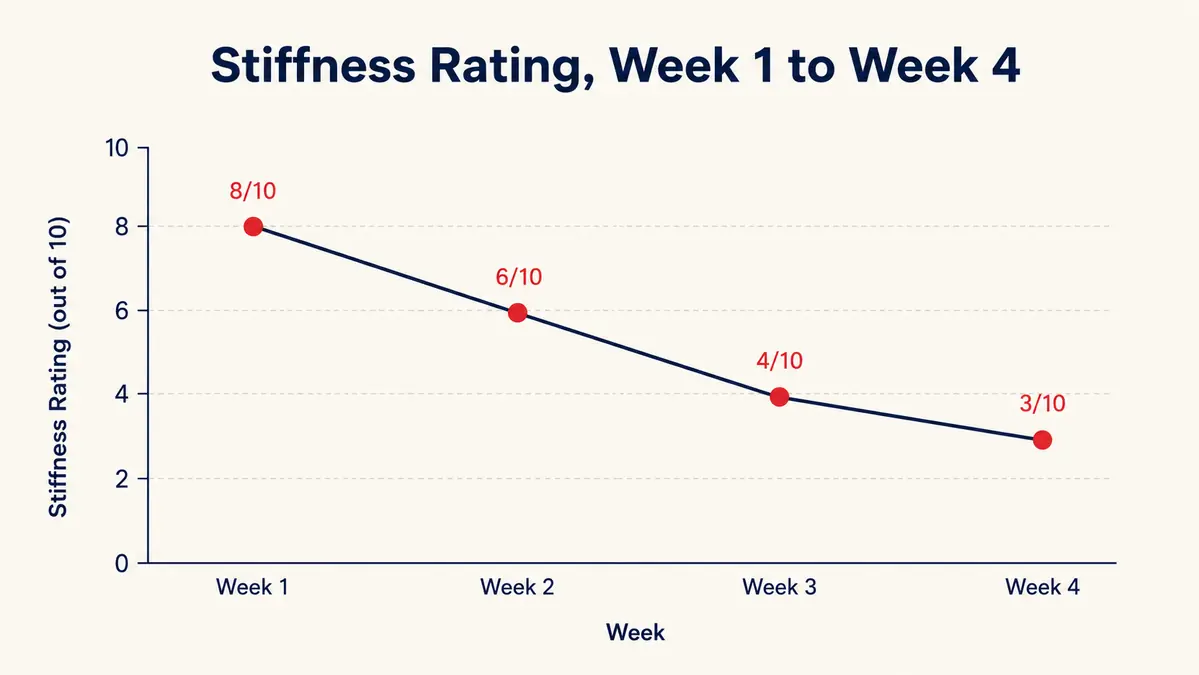
I used to get a dull ache that started right where my neck meets my skull and crawled up into my temple by afternoon. My doctor called it tension-type, tied straight to neck muscle tightness. Once I'd been using the Lumia Wellness block consistently for about three weeks, those afternoon headaches thinned out from nearly daily to maybe once a week. I'm not calling it a cure. I'm calling it a real change I noticed without looking for it.
It works because you keep doing it, not because you did it once
This is the one nobody wants to hear. One session on this block did almost nothing for me. Twenty sessions did plenty. It's a maintenance habit, like changing your own oil instead of waiting for something to seize up. The reason it eased my stiff neck wasn't magic in the foam, it was showing up most nights for a month straight.
What I'd Skip
I'd skip expecting it to fix a neck problem that needs an actual diagnosis. If you've got numbness running down your arm, dizziness, or pain that showed up after a real accident, that's a doctor visit first, not a home traction block. I'd also skip the cheap inflatable neck pillows I tried before this one. They lose air mid-session and you end up adjusting them more than you're actually resting. And I'd skip using it sitting up or half-reclined on the couch. It only does its job lying flat, where gravity and the block are pulling in the same direction instead of fighting your own posture.
One session did almost nothing. Twenty sessions did plenty. That's the whole secret, and it's not much of one.
Ten Minutes a Night. That's the Whole Routine.
No appointments, no gimmicks, no straps and pumps to fuss with. Just a firm block, a flat floor, and ten minutes before bed. That's what turned my neck loose again.
Amazon Check Today's Price on Amazon →