

My name's Gregory Rovik. I'm fifty-four, I run a two-bay shop outside of town, and for two years after my wife Carol passed I didn't sleep through a single night without waking up somewhere around two in the morning with my neck locked up like a rusted bolt. More nights than I want to admit, I'd search neck traction device reviews on my phone at that hour and never pull the trigger on one. I'd lie there in the dark listening to my huskies, Duke and Nika, breathing at the foot of the bed, and I'd try every position I knew and none of them made the ache let go.
Thirty-one years bent under hoods will do that to a neck. The bay ceiling in my shop sits about six inches higher than my head when I'm leaning over an engine, so for three decades I've been craning forward into the same angle, hour after hour, five and sometimes six days a week. Add in the stress of that first year alone in the house, and my neck and shoulders turned into one solid knot that never fully released.
I tried the usual stuff. Heating pad before bed, an ice pack when the heat stopped working, a pillow my sister swore by that cost more than a full brake job. None of it touched the real problem. I'd get maybe an hour of decent sleep, wake up stiff, and drag myself into the shop running on fumes and coffee. Carol used to be the one who'd notice when I was overdoing it and make me sit still. Without her, I just kept grinding until my body forced the issue.
It was my son who brought up the traction block. He'd seen a physical therapist for his own back and mentioned they'd had him lying on a firm foam wedge for a few minutes a day to open up the space between the vertebrae. I'd never heard of doing that for a neck specifically, and I'll admit my first thought was that it sounded like one more gadget aimed at guys my age who'll try anything at two in the morning.
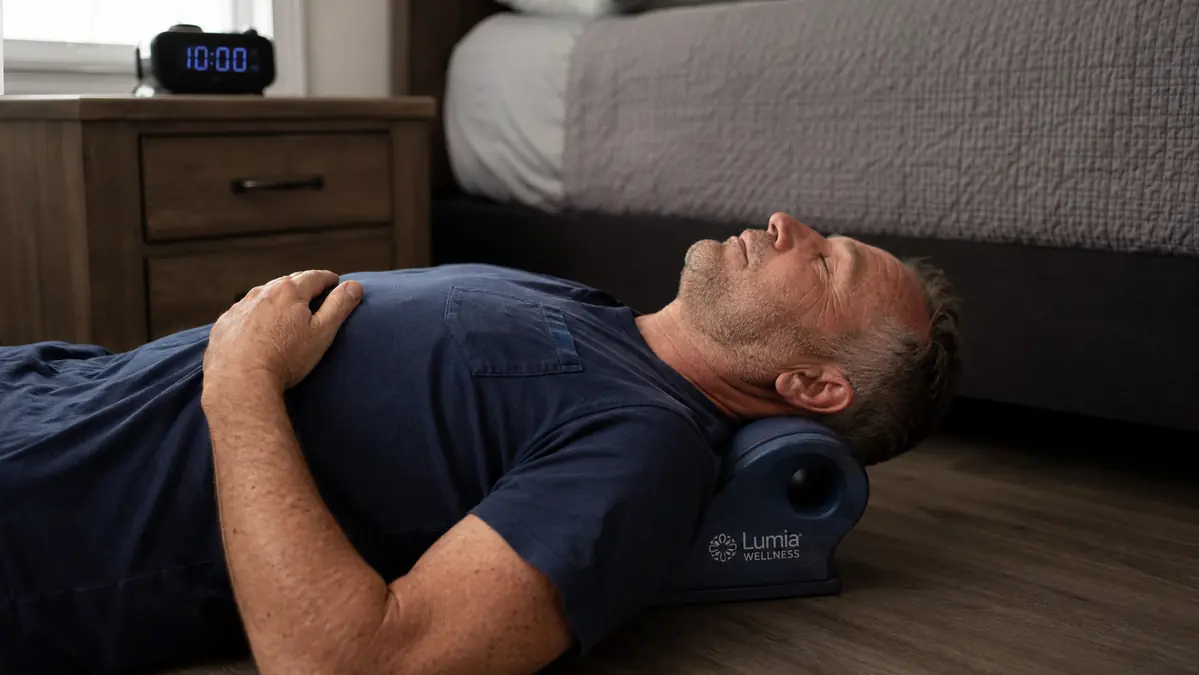
I ordered the Lumia Wellness cervical traction block anyway, mostly out of desperation. It showed up looking like a firm foam wedge with a curved cutout at one end, nothing electronic, nothing with a cord. The instructions said to lie flat on the floor, set the curve under the base of my skull, and stay there for five to ten minutes letting gravity and the shape of the block do the stretching. First night I gave it eight minutes on the bedroom floor before bed, more out of stubbornness than belief.
I felt something let go in the back of my neck that I hadn't felt let go in probably fifteen years, and it scared me a little, honestly, how much tension I'd been carrying without knowing it.
A stiff neck at 2am doesn't have to be your normal.
This is the same Lumia Wellness cervical traction block that finally let my neck release after two years of bad sleep, no cords, no appointments, just ten minutes on the floor before bed.
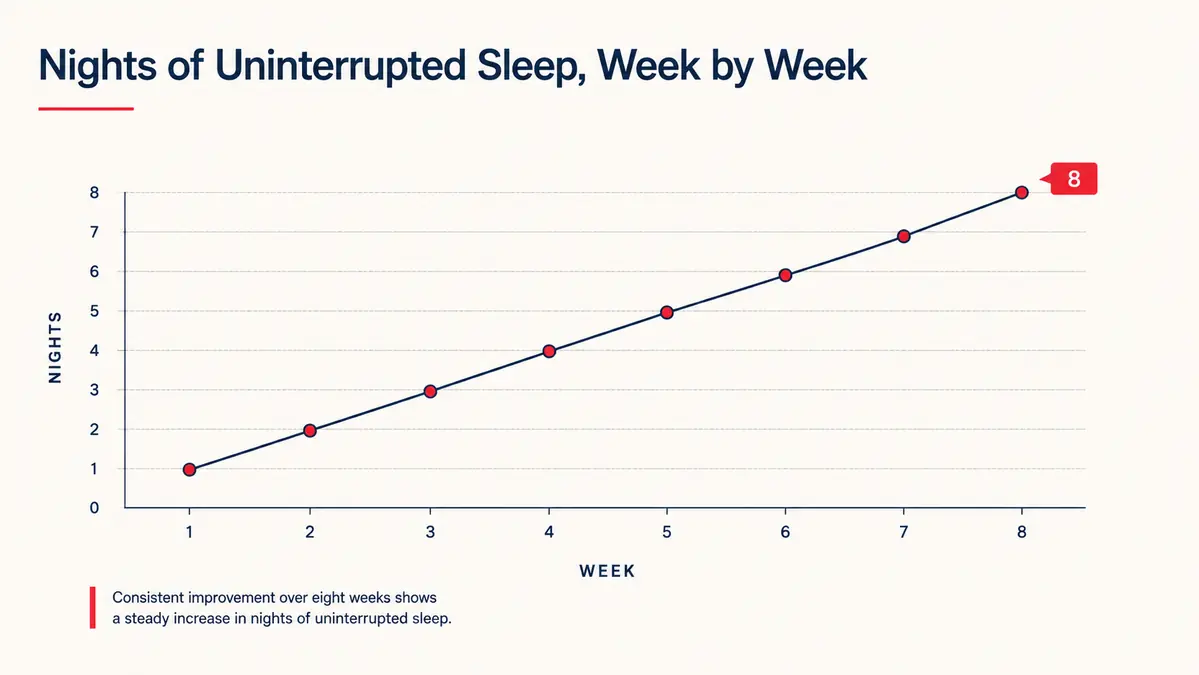
Amazon Check Today's Price on Amazon →That first night I didn't sleep through completely, but I woke up at four instead of two, and the ache in my neck had dulled down to something I could ignore. I kept at it, same routine every night, block on the floor, ten minutes flat on my back with Duke usually flopping down next to me to supervise. By the end of the second week I was waking up once a night instead of three or four times, and by week six I had strings of full nights, start to finish, that I hadn't had since before Carol got sick.

The Lumia Wellness block itself is nothing to look at, dense foam, a curved notch, maybe the size of a shoebox. I keep it under the bed now and it's part of the same routine as brushing my teeth. Some nights my neck is worse than others, usually after a day spent under a truck instead of a sedan, and on those nights I'll do the full ten minutes instead of the usual five or six. I've noticed the shop days don't beat me up the way they used to either. I can turn my head to check my mirrors without that grinding feeling I'd gotten used to calling normal.
A guy at the parts counter I've known for years, Marcus, noticed I looked less wrung out one morning and asked what changed. I told him about the block and he laughed at first, same way I had. He borrowed mine for a week when his own neck flared up after a long drive to see his daughter, and he ended up ordering his own before he gave it back.
What I'd Tell You If We Were Sitting at My Kitchen Table
If you've spent years bent over an engine, a desk, or anything else that keeps your neck craned forward, and you're lying awake at two in the morning the way I used to, I'm not going to tell you this block fixed everything overnight. It took a couple of weeks before I noticed a real difference, and there are still nights it doesn't take the ache away completely. What it did was give my neck ten quiet minutes a day to undo what thirty-one years of hood work had been doing to it, and that was enough to get my sleep back. If you've got a real injury or nerve issue, talk to a doctor before you start lying on anything. But if it's just years of wear catching up with you the way it caught up with me, this is the cheapest, simplest thing I've tried that actually did something.
Some nights all you need is ten minutes flat on your back.
The same Lumia Wellness traction block that got me sleeping through the night again is still under my bed, and it's the first thing I reach for after a long day bent under a hood.
Amazon Check Today's Price on Amazon →