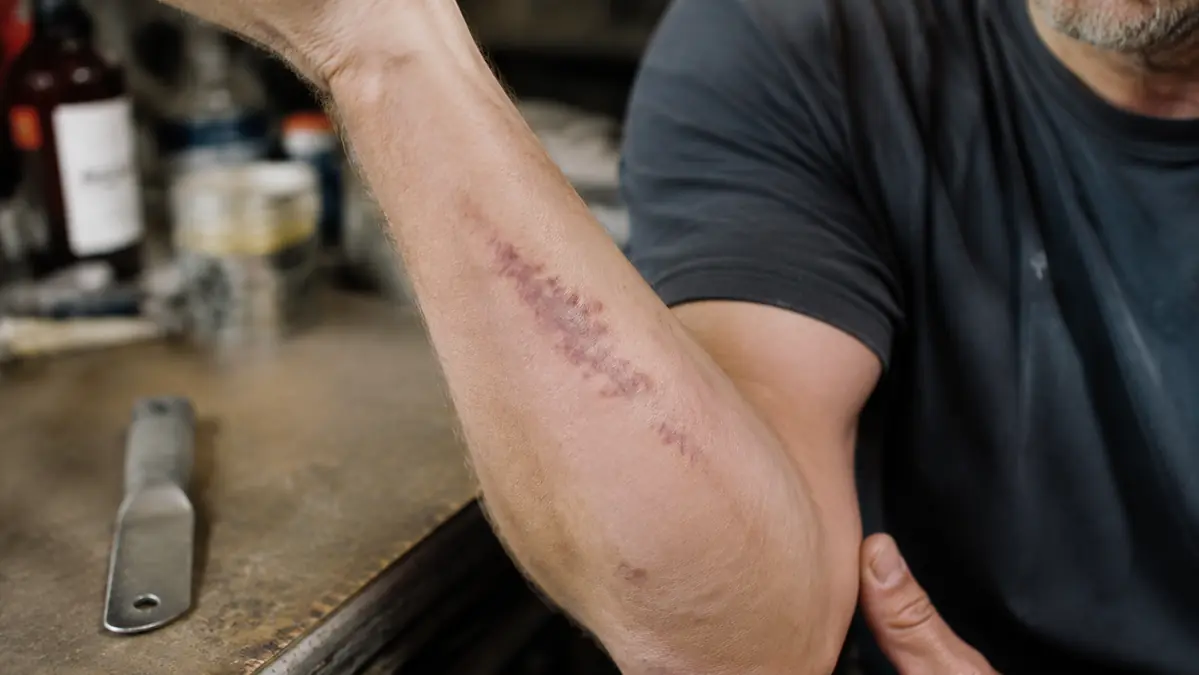
Nobody tells you the truth about this thing before you buy it, so I'm going to. My name's Gregory, I'm 54, I run a two-bay auto shop, and about a year ago my daughter Casey handed me a stainless steel Rylpoint gua sha muscle scraper and told me to quit complaining about my shoulder. I used it wrong the first week, bruised myself up like I'd lost a fight with a socket set, and nearly threw the thing in the scrap bin behind the shop. I didn't. But I want to walk you through the parts of this tool that the five-star reviews skip right past, because I wish somebody had told me before I started scraping on myself like I was trying to strip paint off a fender.
This isn't the story of six months of steady improvement, that's a different article. This is the honest version. The version where I tell you it left marks on my arm that made a customer ask if I'd been in a bar fight. Where I admit I still don't fully trust my technique some nights. Where I tell you flat out who should not be putting a piece of sharpened steel against their skin at all. If you're on the fence about buying one of these, this is the review that actually answers your questions instead of just telling you it changed my life.
The Quick Verdict
A solid tool once you respect it, but the learning curve is real, the bruising risk is real, and this is not for everybody, no matter what the glowing reviews imply.
Amazon Check Today's Price →Before you buy one of these, read what the five-star reviews leave out
This is the tool that bruised my arm in week one before it earned a spot in my routine. Here's what I wish I'd known going in.
Amazon Check Today's Price on Amazon →How I've Used It
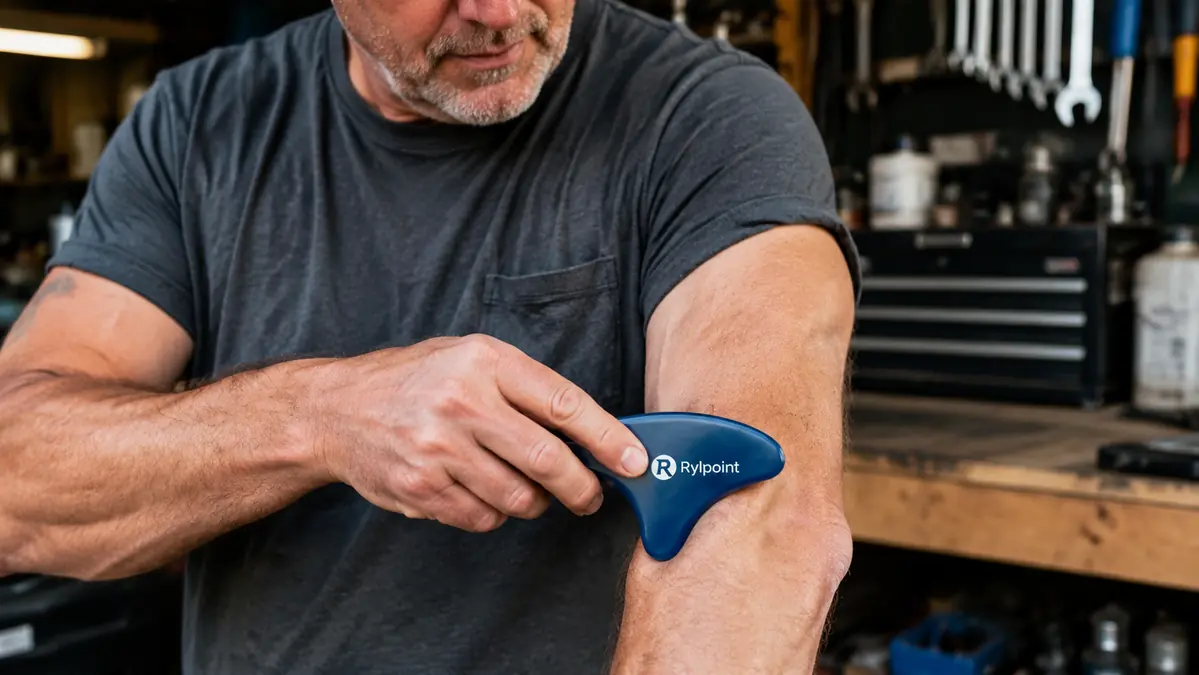
I'm not a physical therapist and I'm not going to pretend I am one. What I am is a guy with thirty-one years of wrench time behind him, forearms that knot up like braided cable, and a shoulder that's been cranky since I rebuilt a transmission solo back in 2019. Casey found this Rylpoint tool on some forum and figured it was worth twelve bucks to shut me up about my shoulder. I opened the box on a Sunday, read the little instruction card in about ninety seconds because that's all there is to it, and started scraping my forearm like I was trying to solve a problem with muscle rather than finesse.
That was mistake number one. I treated a soft tissue tool like it was a wire brush on a rusted bolt. I pressed hard, went fast, skipped any kind of oil or lotion because I didn't feel like walking to the bathroom for lotion, and worked the same spot on my forearm for probably four straight minutes. By the next morning I had a bruise the length of my forearm and a coworker asking pointed questions I didn't feel like answering. That's the part nobody puts in a five-star Amazon review, the part where you learn the hard way that this tool punishes bad technique fast.
I almost stopped right there. I set the tool on the shelf above my workbench next to a box of old spark plugs and didn't touch it again for about four days. Diesel, one of my two huskies, actually knocked it off the shelf chasing a moth, and picking it back up off the concrete floor is honestly what got me to give it a second shot instead of a permanent spot in the junk drawer.
The Bruising Nobody Warns You About
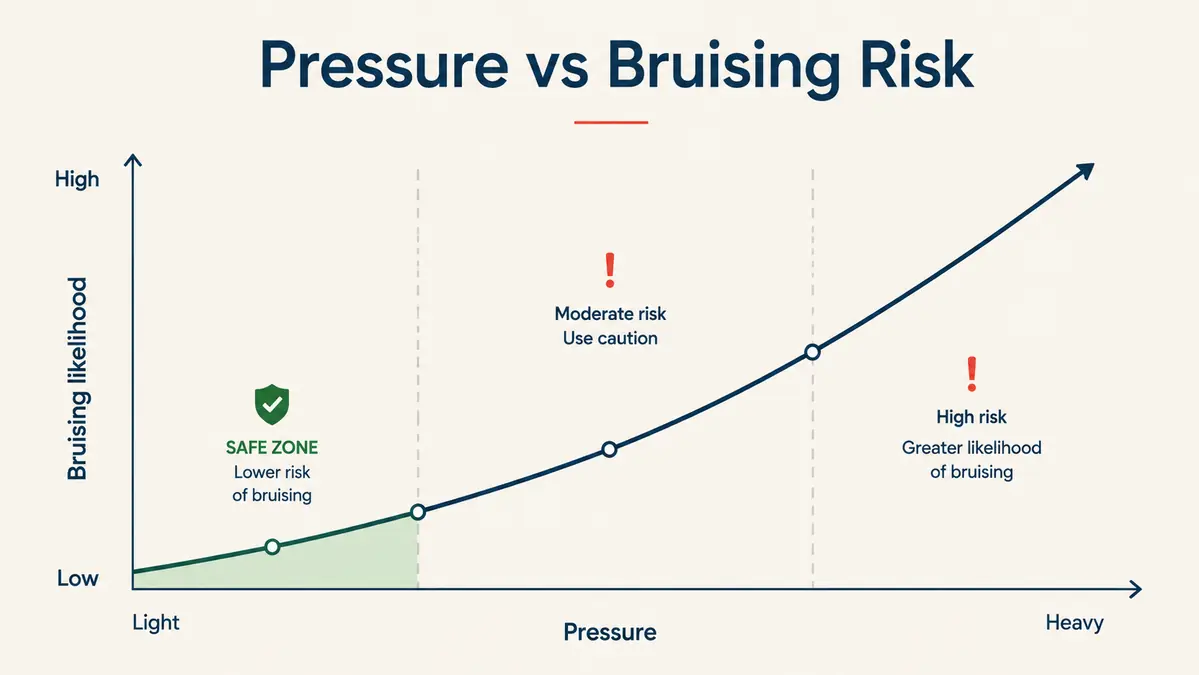
Here's the honest math on it. Stainless steel against skin, with enough downward pressure and repeated passes, is going to break small blood vessels under the surface. That's not a defect in the tool, that's just what happens when metal meets flesh with force behind it. But the box doesn't warn you about it in any real way, and the little instruction card is thinner than a gas station receipt. I went from zero to bruised in one session because I assumed more pressure meant more benefit, the same logic I'd use tightening a lug nut. Wrong assumption entirely.
Once I dialed the pressure back to something closer to what you'd use petting a nervous dog, the marks stopped showing up. Light, repeated passes with oil on the skin, working toward the heart the way the card actually does explain if you read it twice, that's the technique that works without leaving evidence behind. It took me roughly two weeks of trial and error to get there. If you buy this Rylpoint tool expecting to know how to use it correctly on day one, you're setting yourself up for the same bruised forearm I had, and probably the same awkward conversation with a coworker.
There's also a difference between the kind of light redness you get right after a good session, which fades in an hour or two and is apparently normal for this kind of scraping, and actual bruising, which sticks around for a week or more and means you pressed too hard. Nobody explains that difference clearly anywhere in the packaging. I had to figure it out by comparing notes with the massage therapist videos I mentioned, and honestly it should be printed right on the card in plain language, not buried in some forum thread.
The Instructions Are Basically Useless
I want to be blunt about this because it's the biggest gap in the whole product. The card that comes in the box gives you two diagrams and maybe forty words of actual guidance. There's no explanation of pressure, no real breakdown of stroke direction beyond a vague arrow, and nothing about how long a session should run or how often to do it. For a tool that can genuinely hurt you if used wrong, that's a thin safety net.
I ended up watching a handful of videos from a licensed massage therapist online before I trusted myself to use the thing correctly, and I'd tell anyone buying this to do the same before their first session. Don't wing it based on the card alone. Spend fifteen or twenty minutes watching someone who actually knows soft tissue work explain proper angle and pressure. It's not hard once you see it done right, but the box alone will not teach you, and pretending otherwise would be dishonest.
What frustrates me most is how avoidable this is. A QR code on the card linking to a two-minute video would fix ninety percent of the problem. Instead you get a piece of paper that assumes you already know what you're doing, which is a strange assumption for a product aimed at regular people treating their own sore muscles at home for the first time.
Who Should Not Buy This Tool
This is the section most reviews skip entirely, and it's the one I care about most. If you're on blood thinners, this tool is not for you. Breaking small blood vessels on purpose is a bad idea when your blood doesn't clot the way it should, and the bruising I got from a technique mistake would likely be a lot worse and take a lot longer to resolve on medication like that. If you have varicose veins, especially anywhere near the surface where you'd be scraping, leave this tool alone or talk to a doctor first. Dragging sharpened steel over a compromised vein isn't a risk worth taking to save a few bucks on a massage.
I'd also say skip it if you've got a skin condition that's active, anything like eczema flaring up or a cut that hasn't healed, since you're putting direct pressure and friction on the exact spot that's already irritated. And if you bruise easily as a general rule, unrelated to any medication, go in knowing you're more likely than most people to end up marked up even with decent technique. None of this is in the marketing copy on the Amazon listing. It should be.
I'm not a doctor and won't pretend to give medical advice beyond common sense, but if any of the above applies to you, the responsible move is a quick conversation with your physician before you buy, not after you've already got a bruise you're trying to explain away. Twelve bucks isn't worth an unnecessary trip to urgent care.
I've had two customers at the shop mention they use one of these for their own recovery, and both brought up the same concern once I told them about my bruising. One asked point blank whether it was safe with her varicose veins, and I told her honestly what I'm telling you here, that it's a question for her doctor, not for a guy who fixes transmissions for a living. The other had no issues at all and swears by it for his lower back after long shifts on his feet. Your mileage genuinely depends on your own health situation, not just on how careful you are with the tool.
What I Liked
- Genuinely loosens up tight forearms and shoulders once you learn correct pressure
- Solid stainless steel construction, no rust or dulling after regular use
- Cheap enough that the risk of trying it is low
- Small enough to keep in a toolbox, gym bag, or truck console
Where It Falls Short
- Instructions are thin, expect a real learning curve before you stop bruising yourself
- Not safe for anyone on blood thinners or with varicose veins near the treatment area
- First two weeks were rougher and less pleasant than any review led me to expect
- Requires oil or lotion every session or it drags and irritates the skin
The tool didn't fail me in week one. My technique did. Nobody selling this thing wants to say that part out loud.
What Realistic Expectations Look Like
This isn't going to fix a torn rotator cuff or replace an actual physical therapist if you've got a real injury. What the Rylpoint scraper does is help with the everyday tightness that builds up from repetitive work, the kind of knot you get from turning wrenches all day or standing at a lift for eight hours. Think of it as a cheap, at-home version of the scraping a massage therapist might do, not a medical device and not a cure for anything serious. I'd put it in the same category as a foam roller, useful maintenance, not a fix for a real problem.
The improvement I felt was gradual and modest, not the dramatic overnight relief some reviews describe. My shoulder didn't stop hurting after one session. It took consistent, careful use over a few weeks before I noticed I was reaching for the top shelf of the parts cabinet without wincing first. If you go in expecting instant results, you're going to be disappointed and probably tempted to use too much pressure trying to force a result, which is exactly how I ended up bruised in the first place.
I also want to be honest that not every session feels productive. Some nights I go through the motions on my forearms and don't notice much of anything different the next day. That's normal, at least from what I've read and what the massage therapist videos suggested, but it's worth knowing going in so you don't assume the tool has stopped working just because one week feels flat.

What I'd Do Differently If I Started Over
If I could go back to that first Sunday in the garage, I'd do about three things differently. First, I'd read the instruction card twice instead of skimming it once, because the second read is where I actually caught the bit about working toward the heart instead of just scrubbing back and forth like I was scraping gasket residue off a valve cover. Second, I'd keep a bottle of plain oil right next to the tool instead of treating lotion like an optional step I could skip when I was tired. Dry scraping is where most of the irritation comes from, and it's an easy fix once you commit to doing it every single time.
Third, and this is the one that would have saved me the most grief, I'd have started on a smaller, less sensitive area before jumping straight to my forearm. My calves turned out to be far more forgiving while I was still dialing in pressure, probably because there's more muscle and less surface nerve close to the skin. If you're new to this, practice your first few sessions somewhere low-stakes before you bring it anywhere near a spot you can't hide under a long sleeve shirt for a week.
Who This Is For
This tool is for someone with routine muscle tightness from physical work or exercise, who's willing to spend a couple weeks learning correct technique before expecting results, and who has no medical reason to avoid pressure-based soft tissue work. If that's you, and you go in patient instead of aggressive, there's a genuinely useful, low-cost tool here.
Who Should Skip It
Skip it if you're on blood thinners, have varicose veins in the area you'd be treating, have active skin issues, or you're the type who reads a two-line instruction card and immediately assumes you've got it figured out. That last one described me perfectly in week one, and it cost me a bruised forearm and an uncomfortable conversation with a coworker who thought I'd been in a fight.
Now that you know the honest downsides, here's the tool that still earned a permanent spot in my toolbox
Bruising in week one taught me the technique that actually works. If you go in patient, this stainless steel scraper is worth the low cost of trying.
Amazon Check Today's Price on Amazon →