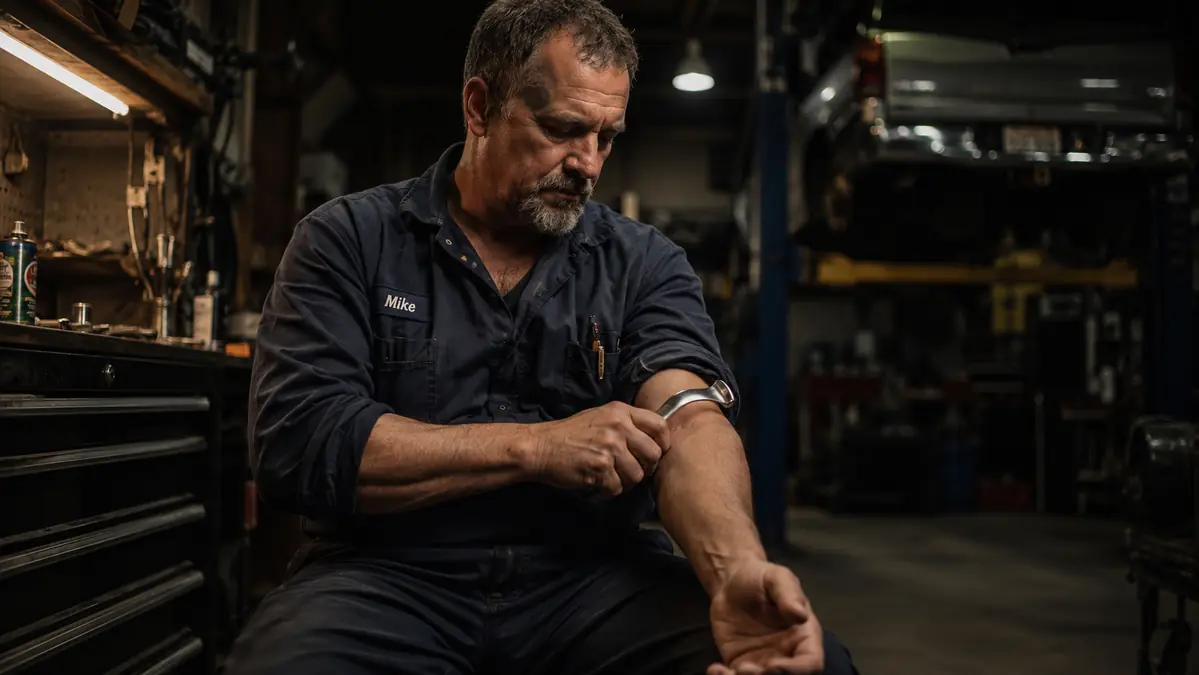
Thirty-some years of laying on a creeper and reaching up into engine bays has left my shoulders and forearms in a permanent state of knotted. I ice them, I stretch them, I've done the foam roller thing. None of it ever got into the specific tight bands the way I needed. My physical therapist put a stainless steel gua sha scraper in my hand about a year ago, the Rylpoint tool, and told me to run it along the muscle instead of just pressing on it. I was skeptical. A curved piece of metal costing less than a fast food meal wasn't going to do what a massage chair couldn't.
I was wrong about that. I've used the same tool most weeks since, mostly on my forearms, neck, and calves after a long day under a truck. Here are ten specific reasons muscle scraping has stuck around in my garage bag longer than half the recovery gadgets I've bought on a whim.
Knots in your forearms and shoulders that ice and stretching won't touch? Try this instead.
This is the exact stainless steel Rylpoint scraper I keep on my workbench. Simple, no batteries, works in under five minutes.
Amazon Check Today's Price on Amazon →It finds the specific knot, not just the general area
A foam roller or a massage ball works a broad patch of muscle whether you need it there or not. The edge of the Rylpoint tool lets me feel exactly where the tight band sits along my forearm, usually right where I've been gripping a ratchet all day, and work that one spot instead of rolling my whole arm and hoping. That precision is the biggest difference between this and everything else I've tried. On a plastic massage ball I'd mash the whole forearm for ten minutes and still walk away with the knot untouched.
It breaks up adhesion that stretching alone never touches
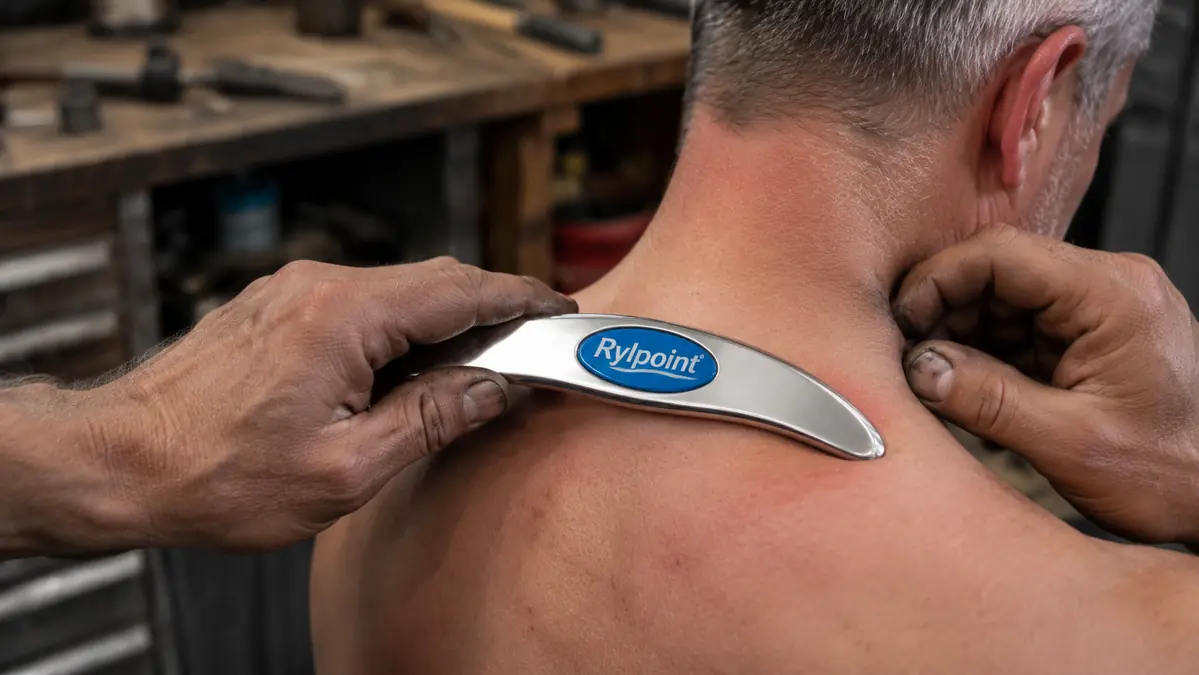
Stretching lengthens a muscle, but it doesn't do much for the sticky fascia that builds up between muscle layers from repetitive motion, which is most of what a mechanic's forearms deal with. Scraping along the grain of the muscle with steady pressure seems to loosen that stuck tissue in a way a static stretch never has for me. My range of motion in my wrist noticeably opens up after a session. That extra motion in my wrist is the difference between wrestling a stuck bolt for five minutes and getting it loose on the first try.
It gets into the neck and shoulders without needing another person
The curved shape has a notch that hooks right over the top of my trapezius, the spot my wife used to work on for me before she passed. I can angle it over my own shoulder and neck without twisting into some pretzel position, which matters when you live alone and don't have anyone around to help you with the hard-to-reach spots.
Five minutes does more than twenty on the roller
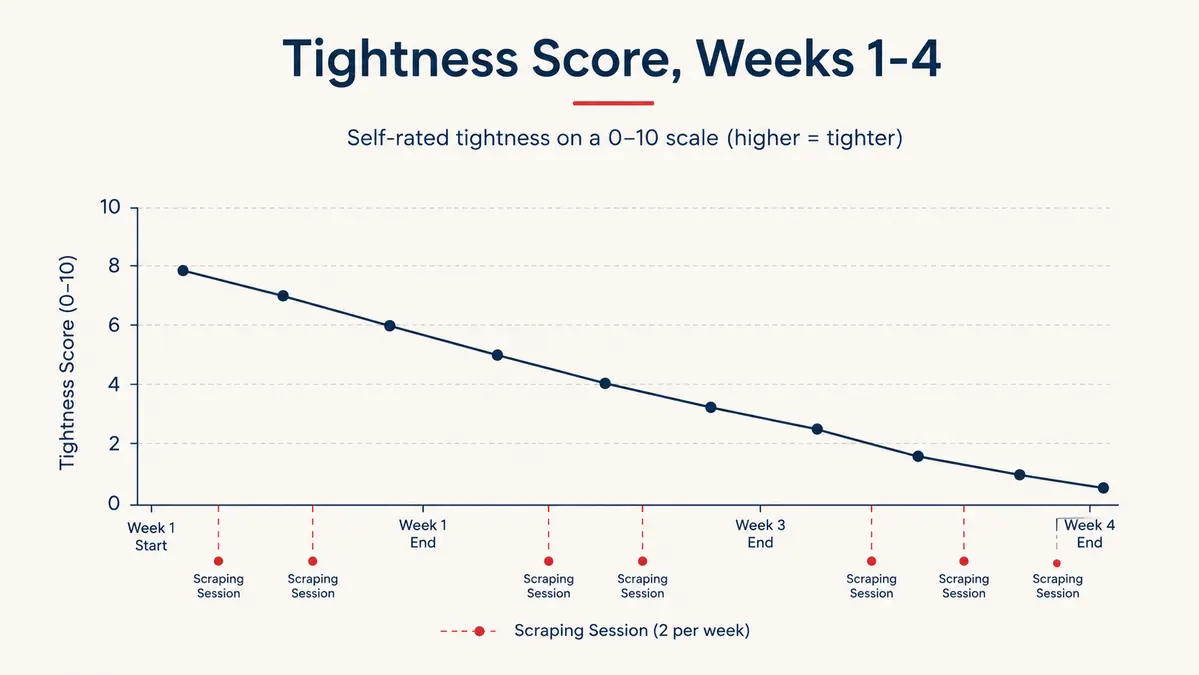
I don't have twenty spare minutes most nights. A focused scraping session on my worst spots, forearm, calf, low back, takes about five minutes total, and I feel looser after it than I ever did after a long foam roller session that left me sweaty and bored. Efficiency matters when you're running a shop and coming home tired. On a bad week I might squeeze in three or four short sessions instead of one long one, and it still adds up to real relief by Friday.
Stainless steel doesn't wear out or crack like the plastic versions
I tried a cheap plastic scraping tool from a gas station display rack years back and it snapped inside of two months. This Rylpoint scraper is solid stainless steel, no give, no cracking, and it wipes clean with a rag after every use. For a guy who's hard on his tools by nature, that durability is worth something.
It gets my calves loose before a long shift on my feet
Standing on concrete floors for ten hours turns my calves into rocks by mid-afternoon. A quick scraping session before I clock in keeps them from tightening up as fast, and I notice less of that dead, heavy feeling by the end of the day. It's become part of my morning routine right alongside coffee. I've started leaving the tool right next to my boots by the door so there's no excuse to skip it before I clock in.
The different edges handle different muscle sizes
The Rylpoint tool has a few different curves and notches built into one piece of steel, a wide edge for my back, a narrow curve for my forearms, a hooked notch for the neck. I didn't need to buy three separate tools for three different jobs, which is more than I can say for most of the recovery gear cluttering my garage shelf.

It costs less than one massage and lasts years
A single deep tissue massage around here runs more than this tool costs outright, and I'd need one every week to keep up with the tightness this job causes. Check today's price before you buy, but I doubt it'll dent your budget, and mine has already outlasted three other recovery gadgets I paid more for.
It doubles as a warm-up before I work on the huskies' leashes and gear
Sounds small, but my grip strength matters for handling two strong Siberian huskies who pull like they're still hauling sleds. Scraping my forearms loose before our evening walk means I've got a firmer, less achy grip on the leash for the whole loop around the block instead of my hand cramping up halfway through. It's a small habit, but it's the kind of small habit that keeps adding up when you do it most days of the week.
It fits the life I actually have, not a spa schedule
I don't have time for weekly appointments or a home gym setup. What I've got is a workbench, a rag, and five minutes here and there between jobs. This tool asks for almost nothing and gives back real relief in the specific spots my job beats up hardest, which is more than I can say for most things I've bought chasing recovery over the years.
What I'd Skip
I'd skip pressing hard enough to bruise, which I did the first couple weeks before I learned the technique is about repeated light-to-moderate strokes, not digging in like you're scraping paint. I'd also skip using it directly over a joint or bone, stick to the muscle belly. And I wouldn't buy one of the thin, flexible plastic versions sold as a novelty item, they flex under pressure instead of transferring it, and you'll be back here shopping for a real one within a month. Every so often I'll pull mine out just to check the edges for nicks before a session, since a rough edge on stainless steel can scratch instead of glide.
I'm not chasing smooth skin or whatever the spa crowd is after. I'm chasing being able to grip a wrench without my forearm seizing up by lunch. This little piece of steel has done more for that than anything else on my bench.
Ready to work the knots out yourself, no appointment needed?
Same stainless steel scraper I keep on my workbench, five minutes a day, no batteries, no gimmicks.
Amazon Check Today's Price on Amazon →