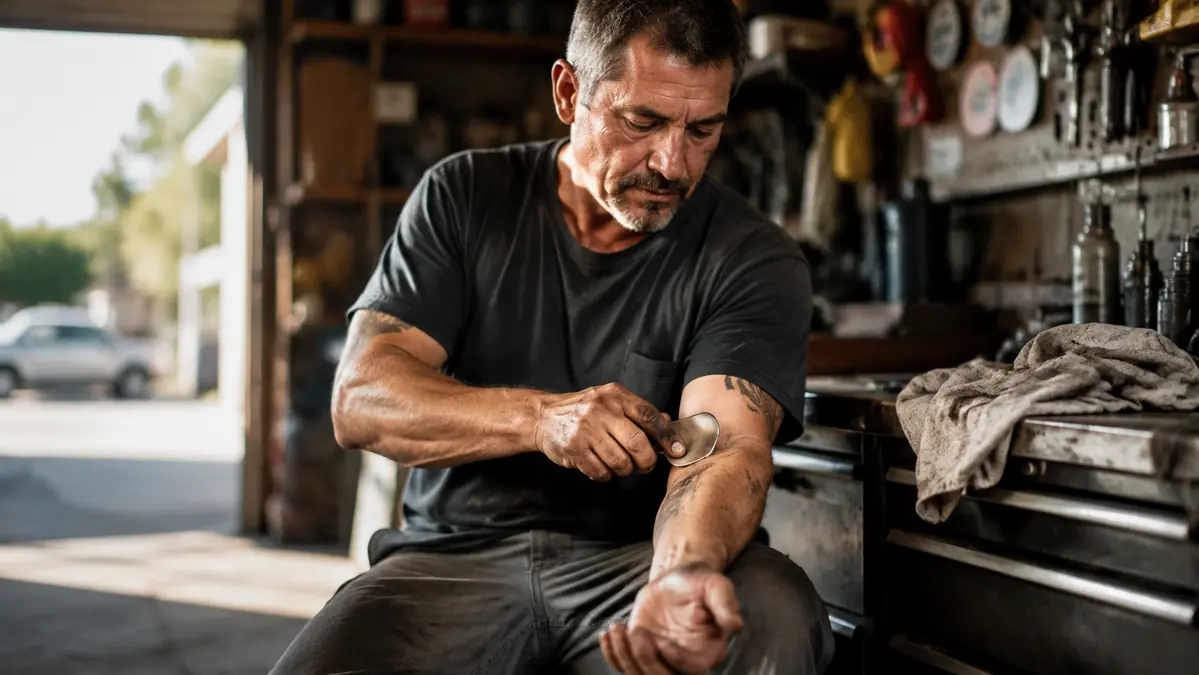
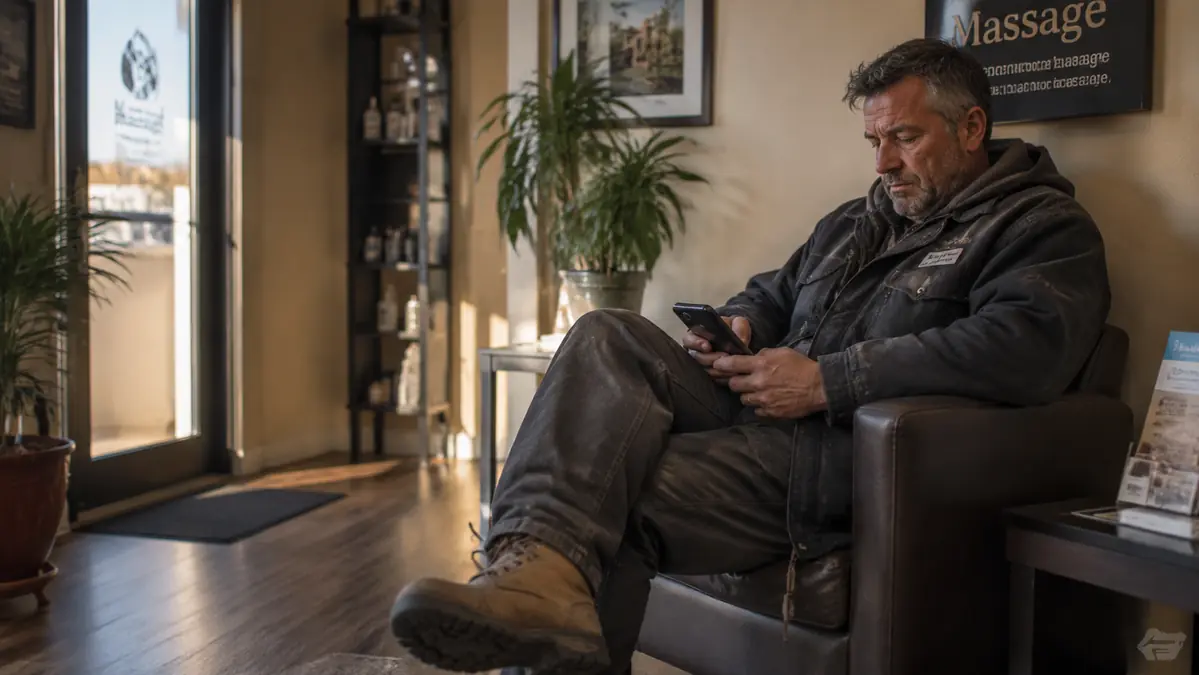
I've been getting massage therapy on and off for about eight years, ever since my back started sending me invoices for three decades of bending over engine bays. My therapist, Denise, works out of a little studio twenty minutes from the shop, and I used to see her every two weeks like clockwork. Then a guy at the parts counter showed me a cheap stainless steel scraping tool he kept in his truck door and told me he'd cut his massage visits down to once a month because of it. I bought the Rylpoint Guasha Muscle Scraper the next week, mostly out of curiosity, and I kept seeing Denise the whole time I tested it. Here's the honest comparison, not a pitch for either side.
The short answer: a thirteen-dollar piece of stainless steel is not going to replace a trained massage therapist, and I'd be lying if I said it could. What it will do is handle the day-to-day tightness that used to send me straight to the phone to book another appointment. Denise finds things in my back and shoulders I can't feel myself and works them out with hands that actually know what they're doing. A muscle scraper just breaks up surface tightness along a muscle you can reach on your own. I still see her. I just don't need her every two weeks anymore.
I should say up front, I'm a mechanic, not a physical therapist or a bodyworker. Everything here comes from using both of these on my own beat-up body for the better part of a year, not from any kind of medical training. If you've got a real injury, a nerve issue, or pain that's getting worse instead of better, none of this is a substitute for getting seen by someone qualified. This is about ordinary daily tightness from hard work, not diagnosing anything serious.
What actually got me testing this wasn't my back, it was my forearms and calves. Wrenching all day leaves my forearms knotted up by quitting time, and standing on a concrete shop floor for ten hours does the same thing to my calves. Denise works on my back and shoulders when I see her, but I was still walking around with tight forearms and calves in between visits with nothing to do about it except grip a lacrosse ball and hope. That's the exact gap I put the scraper up against, the stuff that's tight every single day but isn't worth booking an appointment for.
| Muscle Scraper | Massage Therapy for Working Through Tight Muscles | |
|---|---|---|
| Approach | Rylpoint Stainless Steel Muscle Scraper (at-home) | Professional Massage Therapy (in-office) |
| Cost per use | One-time cost around today's price, then free forever | Roughly $70 to $120 or more per session, every visit |
| Time commitment | 5 to 10 minutes, whenever tightness shows up | Scheduled appointment plus drive time, usually an hour or more total |
| Technique depth | Surface-level scraping along muscle and fascia lines you can reach | Full-body deep tissue work, trigger points, and joint mobilization |
| Skill required | Self-taught, some technique needed to avoid bruising | None on your part, a trained therapist does the work |
| Availability | Anytime, including 9pm after a late shift | Only during business hours, and only if there's an opening |
| Best for | Daily maintenance and working through one tight spot at a time | Deep, whole-body work and problems you can't reach or feel yourself |
| Portability | Fits in a gym bag, toolbox, or glovebox | Not portable, you have to go to them |
Looking at that table, the scraper wins on paper almost everywhere except the two rows that matter most, technique depth and skill. Denise can find a knot between my shoulder blades I didn't even know was there and work it loose with her hands in a way a piece of steel never will. She's also trained to know when something's not just tight muscle but an actual problem worth flagging. That's exactly why I kept seeing her. I just stopped needing her for the everyday stuff a cheap tool can handle on its own.
Where the Muscle Scraper Wins
The biggest thing the scraper has going for it is that it's always right there. My forearms don't lock up on a schedule that matches Denise's office hours. It happens mid-shift with a customer waiting on his truck, or at home after dinner when I finally sit down and feel just how tight my calves got standing on concrete all day. I keep the scraper in the truck door now and another one in a kitchen drawer, and I can work through a tight forearm or calf in the time it takes coffee to brew. No appointment, no drive, no waiting room, just five or ten minutes with the tool angled along the muscle.
The other thing it's done is save me real money without cutting corners on care. I used to book Denise every two weeks partly because I was actually tight and partly because I didn't have another option. Now I use the scraper on the nights my forearms or calves are tight but nothing feels genuinely wrong, and I've cut my massage visits down to about once a month. I'm not skipping the deep work she does. I'm just not paying professional rates for maintenance I can handle myself with a tool that cost less than one copay.
It's also just easier to stay consistent with. I know myself, and I don't always follow through on calling ahead to book something, especially during a stretch when the shop's slammed. The scraper doesn't ask that of me. It sits in the truck door, and using it after a rough day has become as automatic as washing my hands before I get in the truck. That consistency alone is probably doing more for my forearms and calves than any single massage ever did, simply because I actually reach for it.
Where Massage Therapy Wins
Here's what I'd never tell a guy to skip. Denise puts trained hands on my whole back and finds things I can't feel and can't reach with a scraper, a knot near my spine, a tight spot under my shoulder blade, an imbalance from favoring one side after a long day under a lift gate. The scraper only works on muscle I can physically get the tool onto myself, which rules out my whole back and most of my shoulders. Deep tissue work also goes places surface scraping simply can't. She can dig into a spot with her elbow and hold pressure there for a full minute in a way I'd never manage on my own back.
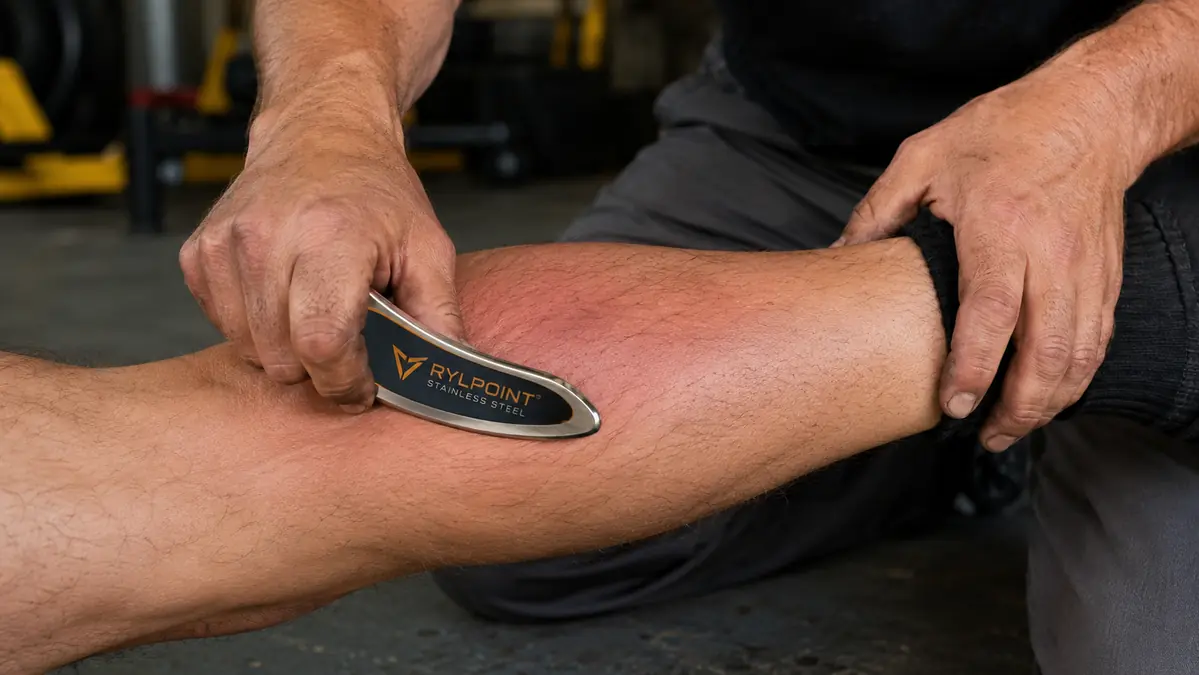
There's also a real skill gap that matters here. The first few times I used the scraper I pressed too hard and left myself bruised up along my forearm for a week, which isn't exactly the recovery I was going for. A trained therapist knows exactly how much pressure a given muscle needs and adjusts on the fly based on how you respond. A scraper doesn't adjust anything. It does whatever you tell it to do, for better or worse, and that puts the responsibility for doing it right entirely on you. If you've got a real injury, chronic pain that's getting worse, or anything beyond ordinary tightness, that's a job for trained hands, not a piece of steel from Amazon.
How I Learned to Use It Without Bruising Myself
I mentioned Denise finding my forearm all bruised up the first month I had the scraper. She didn't yell at me, but she did sit me down and walk me through what I was doing wrong, which honestly told me more than any instruction card that came in the box. I was pressing down hard and dragging slow, treating it like I was trying to sand down a bumper instead of work a muscle. She showed me to use light, consistent strokes along the direction of the muscle fiber, never across it, and to stop the second I saw redness instead of pushing through it thinking more pressure meant more benefit. Once I backed off and slowed down, the bruising stopped and the tool actually started doing what it's supposed to do, breaking up surface tightness instead of just beating up my skin. That's the one piece of advice I'd pass on to anyone picking one of these up for the first time, less pressure than you think, and let your therapist correct your technique if you're already seeing one.
The tool that handles the tightness between massage appointments
I keep the Rylpoint Stainless Steel Muscle Scraper in the truck door for the nights my forearms and calves are tight but nothing feels actually wrong. Cheap, simple, and it's cut my massage visits nearly in half without cutting corners on the real work.
Amazon Check Today's Price on Amazon →What It Actually Costs Over a Year
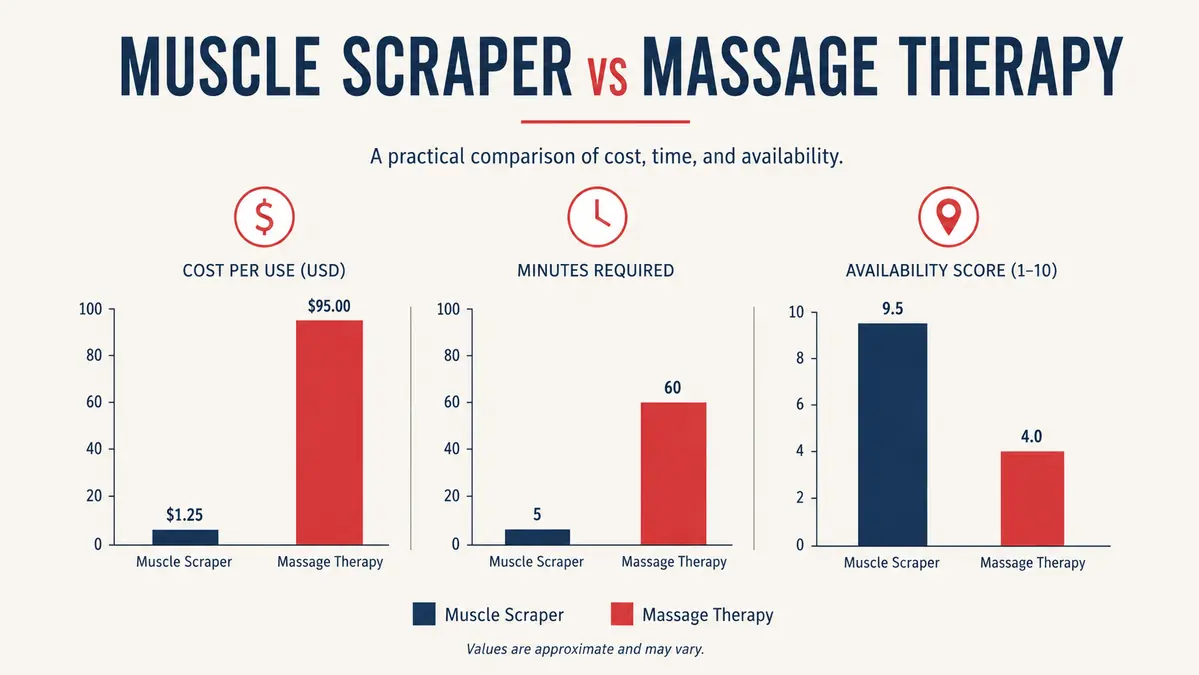
Run the numbers and it's not close. Denise charges around eighty-five dollars a session, and when I was seeing her every two weeks that worked out to somewhere north of two thousand dollars a year just for maintenance, before you even count anything extra for a rough month. The scraper cost me about today's price on Amazon, one time, and it's still the exact same tool a year later. Even cutting my massage visits down to once a month instead of twice, I'm saving somewhere around a thousand dollars a year, and I'm still getting the deep work I actually need from someone qualified to do it.
That gap is the whole argument for using both instead of picking one. If I'd dropped Denise entirely to save money, I'd have lost the deep work and the trained eye that catches problems before they turn into something worse. If I'd kept paying for twice-a-month visits just to manage everyday forearm and calf tightness, I'd have been spending real money on something a thirteen-dollar tool handles just fine. Using the scraper for daily maintenance and paying for massage therapy for the deep, whole-body work is how I get the benefit of both without the cost of doing everything the expensive way.
How I Actually Split This Now
My routine now is straightforward. I run the scraper along my forearms and calves most nights I've had a hard shift, usually while I'm sitting on the couch after dinner with the huskies parked at my feet. I still see Denise once a month for the full back and shoulder work I can't do myself, and if anything ever feels like more than ordinary tightness, numbness, sharp pain, something that isn't easing up in a couple days, I'm calling her office instead of reaching for the scraper again. The tool handles maintenance. She handles anything that isn't just maintenance, and I don't blur that line no matter how good the tool's been.
The scraper didn't replace my massage therapist. It just stopped me from needing her for stuff I could handle myself with a piece of steel that fits in a truck door.
Who Should Buy Which
If you're tight from ordinary hard work, standing all day, gripping tools, sitting at a desk with your shoulders hunched, and you don't have any real pain or injury behind it, the muscle scraper is a smart, cheap first move. It's simple to learn, it lives wherever you keep it, and it'll probably cut down how often you feel like you need a professional at all. If you've got pain that's getting worse, an injury, or knots you can't reach or work loose on your own, that's exactly what massage therapy is built for, and no thirteen-dollar tool is going to substitute for trained hands finding the actual problem.
I don't really see this as either-or, even though the headline makes it sound that way. I use both, and the scraper is what keeps my massage visits from turning into a twice-a-month bill for garden-variety tightness. It's not doing Denise's job. It's just handling the stuff that doesn't need her. If you've been skipping both because appointments are a hassle and you've gotten used to being tight, start with the scraper, pay attention to how your body responds, and don't be stubborn about booking a real session if something feels like more than tired.
Give your muscles a cheaper option before the next appointment
The Rylpoint Stainless Steel Muscle Scraper won't replace a real massage therapist, but it'll handle the nights you're tight and nothing's actually wrong. Simple, portable, and small enough to keep in a truck door or a kitchen drawer.
Amazon Check Today's Price on Amazon →