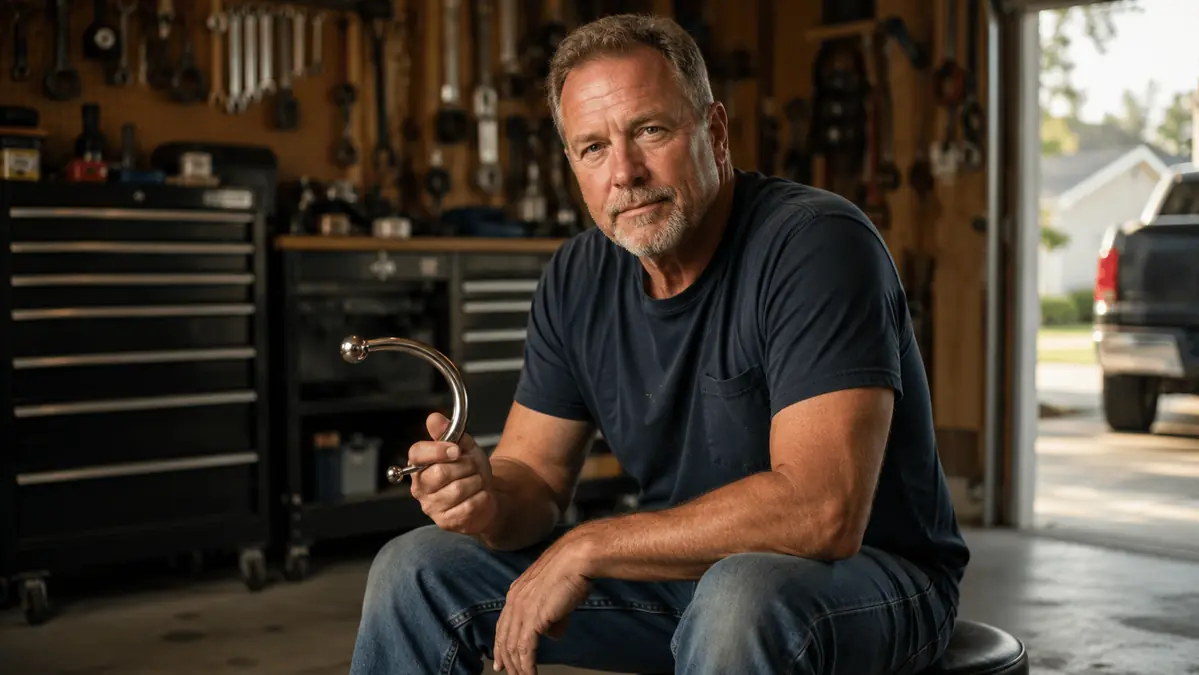
There's a knot that lives in the meat of my right shoulder, right where the trapezius meets the neck, that's been there so long I used to think it was just part of my anatomy. Thirty-plus years of holding my arm up over my head under a hood, torquing bolts I can't see, does that to a man. I'm 54, I've been turning wrenches since I was 23, and by the time I found a stainless steel gua sha scraper sitting in a bin at the counter of a supplement shop, I'd tried heating pads, a cheap massage gun, and a lot of just gritting my teeth through it.
What follows is the actual five-step routine I run with a Rylpoint stainless steel scraping tool most evenings, not something copied off a physical therapy handout. I'll walk you through exactly how I set it up, how I work a knot, and what I've learned the hard way about pressure and direction. Then a section at the end on what else I pair it with, because a piece of steel alone was never going to undo three decades of holding a socket wrench over my head.
I want to be honest about what this tool actually does before you buy one. It's not going to dissolve scar tissue or fix a torn muscle, and anybody selling it that way is stretching the truth. What it does is apply focused pressure along a muscle in a way your own hands can't quite manage, breaking up the surface tension in a knot and getting blood moving through tissue that's been locked down tight. That's a specific, modest job, and once I stopped expecting a miracle and started using it right, it earned a permanent spot on my nightstand.
A knot that's been there for years doesn't need a machine, it needs the right angle.
The Rylpoint stainless steel gua sha tool is what I use to work the knot out of my own shoulder most evenings. Check today's price and current rating on Amazon before your first session.
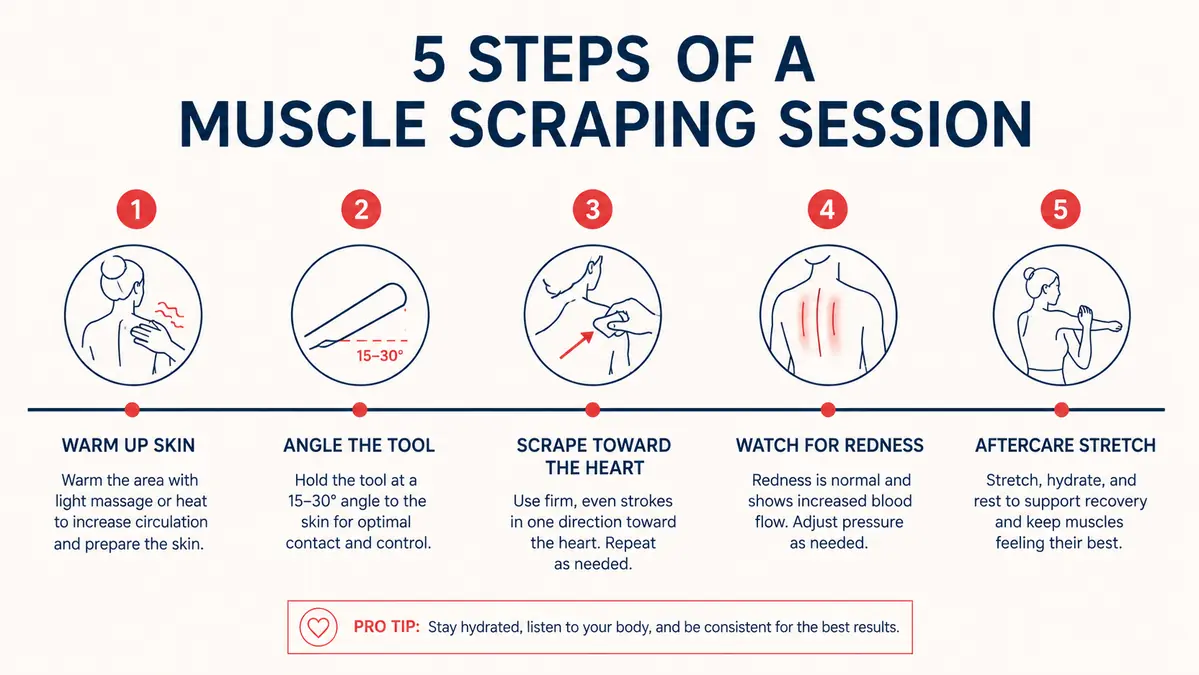
Amazon Check Today's Price on Amazon →Step 1: Warm the muscle up and get a thin layer of oil down first
Dragging cold steel across a cold, tight muscle is a good way to do nothing but irritate your skin. I either scrape right after a hot shower, when my shoulders are already loose from the water, or I'll do a couple minutes of arm circles and shoulder rolls first if I'm scraping before bed on a night I didn't shower late. Either way, the muscle needs to be warm going in, not stiff off the couch.
I keep a small bottle of plain grapeseed oil next to the tool. A few drops rubbed into the skin before I ever touch the steel to it, that's non-negotiable for me now. The first time I tried this dry, thinking oil was just a nice-to-have, I scraped a raw patch into my forearm that stung for two days. Oil lets the tool glide instead of drag, and drag is where the skin damage comes from, not the pressure itself.
I don't drown the area in oil either. Just enough that the tool moves smooth under light pressure, tested with one slow pass before I get into the actual work. If it's still catching or pulling at the skin, I add a couple more drops and try again. Takes maybe thirty seconds total, and skipping this step is the single fastest way to turn a helpful tool into a painful mistake.
The stainless steel matters here too, more than I expected going in. I tried a cheap jade version a buddy had lying around once and the edge felt inconsistent, almost gritty in spots. The stainless tool holds a smooth, even edge every single time, which sounds minor until you're the guy pressing metal into his own skin every night and wondering if this pass is going to catch wrong.
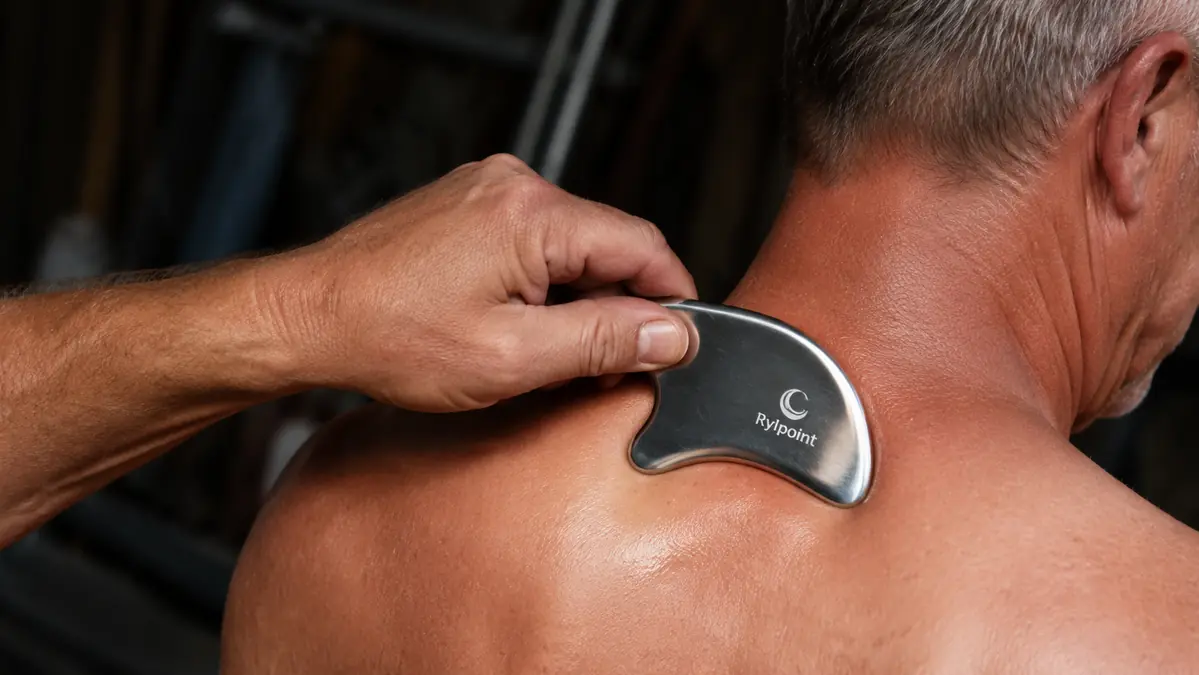
Step 2: Find the right angle before you apply any real pressure
The edge of the tool should sit at roughly a thirty to forty-five degree angle against your skin, not flat and not standing straight up. I learned this by getting it wrong first, holding it too upright on my forearm and basically digging a corner into myself instead of gliding the curved edge across the muscle. Once I laid it down closer to flat, the whole feel changed from a jab to a controlled drag.
I always start with a pass so light it barely feels like anything, just enough to confirm the angle is right and the oil is doing its job. That first light pass is also when I'm feeling around for exactly where the knot lives, because tight muscle has a different texture under the tool than the surrounding tissue, almost like a rope running under the skin instead of smooth muscle.
Once I've found the spot and confirmed the angle feels right, I'll increase pressure gradually over the next few passes, never jumping straight to hard pressure on pass one. My shoulder knot needs more pressure than my forearm ever does, dense tissue built up over decades responds differently than a muscle that's just tight from one bad day, and I've learned to let the tissue tell me how hard to press instead of using the same pressure everywhere out of habit.
Step 3: Scrape in short strokes, generally toward the heart
For my forearms, that means scraping from wrist up toward the elbow. For my shoulder, it's short strokes moving from the base of my neck out toward my shoulder joint, generally following the direction blood and lymph fluid naturally drain rather than fighting against it. I keep each stroke short, maybe two to three inches, rather than one long drag from one end of the muscle to the other, because short strokes let me control pressure and check in on how the skin's responding as I go.
I work each spot for six to eight passes, then move an inch over and repeat, covering the whole area around the knot instead of hammering one exact point over and over. The knot itself, that dense rope-like spot in my trapezius, gets a little extra attention, but I don't sit there grinding on it for five straight minutes hoping it'll dissolve on the spot. Patience over one session beats intensity in one session, every time I've tested it against myself.
A whole session, both shoulders and both forearms on the nights I do all of it, runs me about ten minutes. Some nights it's just the one shoulder for three or four minutes because that's the only spot barking at me. I don't force a full routine every single night, I work whatever's actually tight that day, same way I wouldn't torque down every bolt on a truck if only one's loose.

Step 4: Watch for redness, and know the difference between working and overdoing it
Some redness is normal and expected, that's blood coming to the surface, which is a chunk of why this works. What I watch for is the difference between an even, pink flush across the area and sharp, localized bruising or broken skin in one spot, which means I pressed too hard in one place or dragged instead of gliding. In the first month I raised a couple small bruises on my forearm before I dialed the pressure back and slowed my strokes down.
If I see that darker, splotchy bruising show up, that's my sign to back off pressure next session and let that spot rest a couple extra days before working it again. I don't chase bruising as a sign of progress, and I'd tell any buddy the same thing, more color isn't the goal, loosening the tissue is the goal, and you can absolutely get there without leaving marks that stick around for a week.
If you're on blood thinners, have a clotting condition, or have varicose veins in the area you're working, talk to your doctor before you start scraping. I'm not a physical therapist or a doctor, I'm a mechanic who's paid close attention to what works on his own body over several months, and that's the same level of caution I'd want any buddy in a similar spot to take before he starts dragging steel across his skin.
Step 5: Finish with a stretch and give the area a day to settle
Right after I put the tool down, I'll do a slow stretch through whatever I just worked, shoulder rolls and a cross-body arm stretch if it was my trapezius, wrist flexor stretches if it was my forearms. The muscle is warm and a little more pliable right after scraping, so a gentle stretch in that window seems to lock in some of the looseness instead of letting the tissue just tighten right back up cold.
I don't scrape the exact same spot two nights in a row if it left any real redness or soreness. My shoulder knot gets worked maybe every other night, my forearms less often since they don't carry the same decades of buildup. Giving tissue a rest day between sessions is something I ignored early on, scraping the same sore spot nightly out of impatience, and all it got me was skin that stayed irritated instead of muscle that actually loosened.
Three months in, that shoulder knot is still there, I won't pretend it's gone, but it's noticeably smaller and it doesn't lock up my whole range of motion the way it used to on cold mornings. The forearm tightness from gripping wrenches and ratchets all day responds faster, usually loosens within a session or two of a bad week. Consistency over a few months did more for me than any single dramatic session ever could.
What Else Helps
The scraper loosens tissue that's already tight, but it doesn't touch what's causing the tightness to build back up, which for me is hours a day holding awkward positions under a hood or a lifted truck. I've started paying more attention to my posture at the shop, dropping my shoulder and switching arms when I catch myself holding one position too long instead of powering through it the same way every time. Small change, but it's cut down on how fast that shoulder knot rebuilds itself between sessions.
Staying hydrated made a bigger difference than I expected too. Dehydrated tissue feels stiffer under the tool, drags more even with oil down, and I noticed my sessions went smoother on days I'd actually had enough water instead of running on gas station coffee. A hot shower before scraping, mentioned above, does double duty here, loosening the muscle and making the whole session more comfortable start to finish.
I also started doing a few basic forearm and shoulder stretches in the morning before I even head out to the shop, not a full workout, just two or three minutes of movement to keep the tissue from locking up cold overnight. Between the stretching, the scraper most evenings, and just being more aware of how I'm holding my body during a repair, the whole picture works better than any single piece of it on its own. Deacon and Luna, my two Siberian huskies, get an evening walk most nights too, and getting my shoulders swinging and my blood moving before I sit down to scrape seems to make the tool's job easier once I get to it.
The scraper doesn't erase thirty years of holding a wrench over my head. It just gives that knot in my shoulder ten minutes a night where something's actually working on it instead of just aching.
A knot that's built up over years won't quit on its own. Ten minutes with the right angle actually moves it.
If you've got a spot that's been locked up for longer than you can remember, the Rylpoint stainless steel gua sha tool is what I'd hand a buddy in the same spot I was in. Check today's price and current rating on Amazon before your first session.
Amazon Check Today's Price on Amazon →