
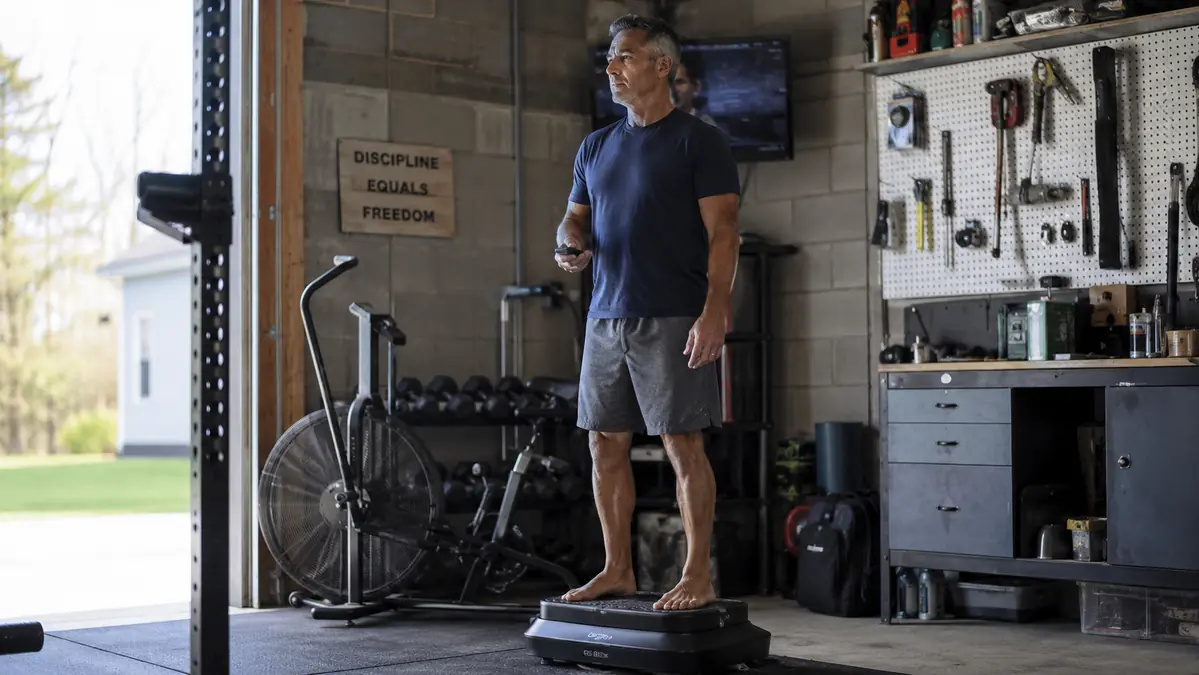
By the time I clock out most days, my legs feel like they belong to somebody else. Twelve hours on a concrete floor, half of it on a creeper under a lift, does something to the circulation in your calves and feet that no amount of standing mats fixes. I'd tried the mats, tried better boots, tried compression socks I still own and still wear. None of it touched the deep, heavy ache I'd get by hour ten. So when a guy at a trade show was demoing a Lifepro 4D Vibration Plate and told me it was built for exactly that kind of circulation fatigue, I almost walked past it. I'd heard the pitch before on cheaper machines and walked away unimpressed. This one was 399.99 dollars, which is not pocket change for a mechanic paying a mortgage alone, and I wasn't about to drop that kind of money on a whim.
I sat on it for three weeks, read through the actual spec sheet instead of the sales copy, and finally bought it in January 2026. What follows is six months of daily, or close to daily, use in my garage, logged the same way I log torque specs, because at this price point I wanted proof, not a feeling.
The Quick Verdict
A genuinely well-built machine that earns its price if you use it daily, but it is not a toy for the shelf, it demands a real routine to justify what you paid for it.
Amazon Check Today's Price →Six months of daily use on legs that stand on concrete all day, here's the honest verdict
This isn't a review from someone who used it twice for a photo. I logged sessions for half a year on legs that take a real beating at work, and I'll tell you straight whether the 400-dollar price tag holds up.
Amazon Check Today's Price on Amazon →How I've Used It
My routine is short because I don't have room in a twelve-hour shop day for anything long. Most evenings, right after I get home and before I let the dogs drag me out for their walk, I stand on the Lifepro plate for ten to fifteen minutes. I run it on a mid-range speed for the first five minutes just standing relaxed, letting the vibration work through my calves and feet, then I bump it up and do a light set of slow squats and calf raises for the back half. Diesel and Nova, my two huskies, have learned the hum means I'm almost ready to walk them, so they sit at the garage door staring at me the whole time.
I skipped weekends for the first month out of laziness, then noticed my Monday legs felt worse than my Friday legs, which told me something. I switched to a near-daily habit after that, seven days a week when I could manage it, five at minimum. That consistency is the whole story with this machine. The two times I fell off for over a week, once for a bad flu in March and once during a family thing in May, the leg fatigue crept right back to where it started within days.
I logged every session in the same notebook I use for oil change intervals, speed setting, minutes, and a one-to-ten rating of how my legs felt the next morning standing up from bed. That log is the only reason I trust what I'm telling you here, because six months of shop work blurs together fast and memory alone would have made me sound better than the data actually shows.
What's Actually in the Box
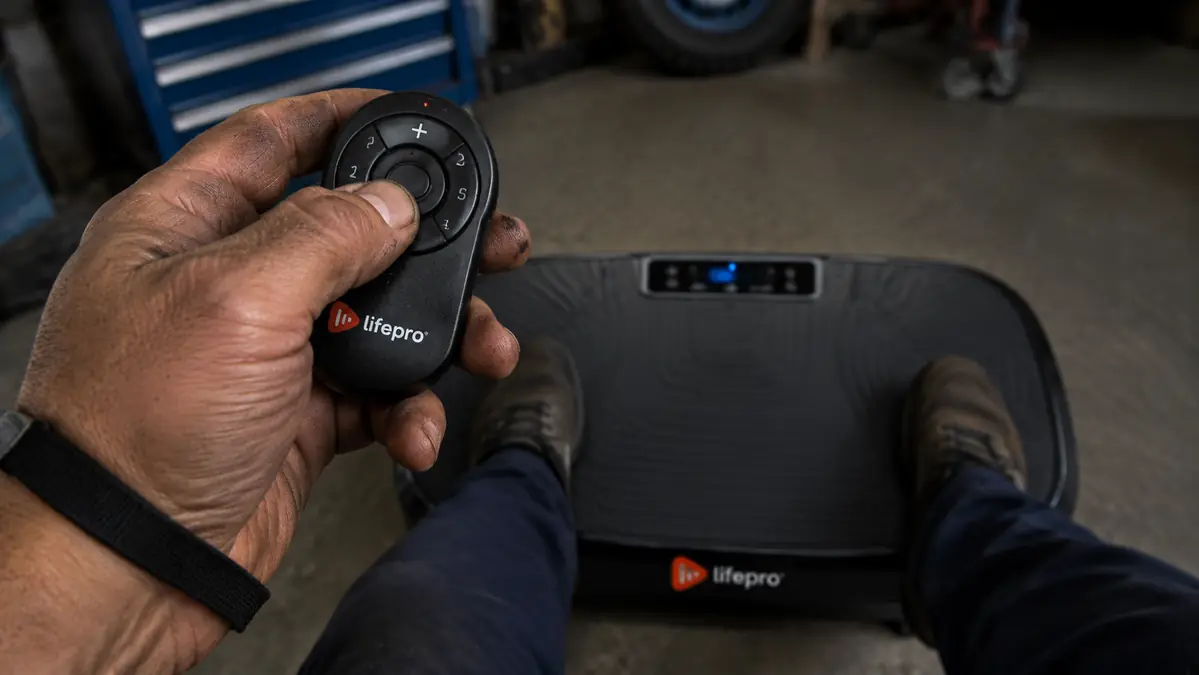
The Lifepro 4D is a triple motor unit with 60 speed levels and 7 preset programs, plus a wrist remote so you don't have to bend down and fumble with the base every time you want to change something. That remote matters more than it sounds. On a cheaper single-motor plate I tried at a friend's house years ago, you had to crouch down to a control panel on the floor, which defeats half the point when your knees or back are the reason you're using the thing in the first place.
The 4D motion is the real difference from the basic oscillating plates I looked at first. It moves front to back, side to side, and up and down instead of just the simple side-tilt you get on the cheap ones, which is supposed to engage more muscle groups and hit circulation from more angles. I can't verify the physiology beyond what I felt, but standing on it does feel noticeably different, less like a jackhammer under your feet and more like a rolling wave. My first cheap experience years back rattled my fillings loose, this one didn't.
Build quality is where the price tag starts making sense. The platform is a solid, heavy base, not the hollow-feeling plastic shell some of the under-150-dollar plates use. I'm 210 pounds and I don't baby my equipment, and six months in there's no wobble, no creak, nothing loose. Lifepro backs it with a warranty too, which factored into my decision given what I was spending. A shop-grade tool that folds after a year isn't worth a discount price, let alone this one.
The 399-Dollar Question: Investment or Impulse Buy
I want to be straight with you about the money, because I think most reviews skip this part. Four hundred dollars is real money to a guy who works with his hands for a living. It's not an impulse buy you toss in a cart at checkout. I treated this decision the way I treat a shop tool purchase, what's the cost per use going to look like a year from now, and will I actually reach for it or will it become a coat rack.
Six months in, I've used it somewhere around 150 times based on my log. Do the math on that and it's already down under three dollars a session, and it's not slowing down. Compare that to what I was spending on massage appointments some months, sixty to eighty dollars a visit when my legs got bad enough that I caved and booked one. This machine paid for itself against that alone by month three.
The honest caveat is that the math only works if you actually use it. I've got a cheap resistance band set from years back that cost fifteen dollars and never left the bag, and that fifteen dollars was still wasted money because it never got used. If you're the type who buys equipment with good intentions and then lets it collect dust after two weeks, no price point saves you from yourself, and this one being expensive doesn't guarantee discipline. I only trust my own verdict here because I tracked it. If you can't commit to at least ten minutes most days, save your money.
Six Months In: What Changed
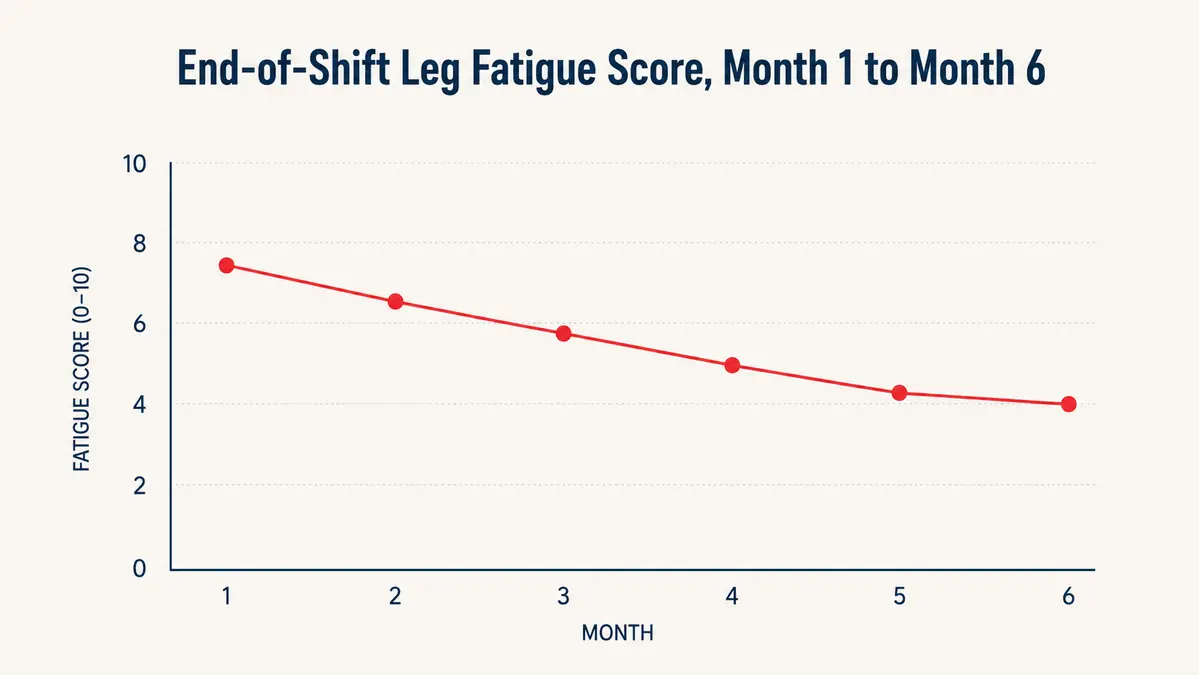
The clearest change showed up in how my legs feel walking into the house at the end of a shift. Before this, I'd sit down the second I got inside because standing another minute felt like too much. By month two, that urgency had faded. By month four, I could get through making dinner and taking the dogs out before I needed to sit, which doesn't sound like much until you've lived the other version of that evening for years.
I also started noticing less swelling around my ankles by the end of long days, the kind of puffiness that used to leave sock lines pressed into my skin for an hour after I took my boots off. That eased up noticeably starting around month three and has stayed better since, as long as I'm keeping up the near-daily habit.
What didn't change: my lower back still aches after a day spent mostly on the creeper under a vehicle, and this machine did nothing measurable for that specific pain. It's a leg and circulation tool in my experience, not a full-body fix. I want to be clear about that because at this price point, overselling what it does would be doing you a disservice.
The Tradeoffs Nobody Mentions
The Lifepro unit is heavy, which is good for stability and bad for anyone who thought they'd move it room to room easily. Mine lives permanently in a corner of the garage now. If you're planning to use this in a small apartment and stash it under a bed between sessions, know that it's a two-person lift for anything beyond sliding it a few feet, not something you're tucking away solo every night.
It's also louder than I expected at the higher speed settings, enough that I don't run it late at night without waking anyone else in the house up. Most of my sessions are early evening so it's never been an actual problem for me, but if your schedule only allows for late-night use in a shared space, that's worth knowing before you buy.

Alternatives I Considered First
Before landing on this one, I looked hard at the sub-150-dollar plates sold under a dozen different no-name brands online. I actually bought one of those first, a cheap single-motor unit, and sent it back within two weeks. It rattled apart at the base screws, the vibration felt harsh and uneven rather than smooth, and the single speed control was basically on or off with nothing useful in between. That experience is part of why I was skeptical walking into this purchase.
I also considered just doubling down on massage appointments and calling it done, since that was already working when I could afford the time and money for it. The math didn't hold up long term, and scheduling around a therapist's calendar never fit a shop schedule that changes week to week. Having something at home I control on my own time ended up mattering more than I expected going in.
Cost was the real fork in the road. A basic massage session runs sixty to eighty dollars where I live, and I was doing that roughly monthly when my legs got bad enough. Over a year, that adds up to more than this machine cost once, with none of the daily availability. That comparison is what finally got me to pull the trigger after three weeks of sitting on the decision.
What I Liked
- Triple motor 4D movement feels smoother than the single-motor plate I tried and returned
- Wrist remote means no crouching down to change speeds mid-session
- Heavy, stable base with zero wobble after six months of daily use at 210 pounds
- Noticeable drop in end-of-shift ankle swelling and leg fatigue starting around month three
- Cost per use dropped under three dollars a session by month three of near-daily use
Where It Falls Short
- 399.99 dollars is a real commitment, not an impulse buy for most working people
- Heavy enough that it's not easily moved solo once it's set up somewhere
- Runs loud enough at higher speeds that late-night use in a shared home isn't ideal
- Did nothing measurable for my lower back pain, it's a leg and circulation tool specifically
- Only works if you actually show up daily, missed weeks let fatigue creep right back
I've bought enough cheap tools that failed within a year to know the difference between paying for quality and paying for a brand name. This one, six months in, feels like the first kind.
Who This Is For
If you're on your feet on hard flooring for most of a shift, mechanic, warehouse, retail, nursing, kitchen work, and you finish the day with heavy, swollen legs, this is worth the money if you can commit to using it most days. It's also a solid fit for anyone who's tried the cheap under-150-dollar plates and come away unimpressed, because the difference in build quality and motion smoothness is real, not marketing. If you already pay out of pocket for regular massage or circulation therapy and the cost is adding up month over month, this is the kind of tool that pays for itself within a season if you stick with it.
Who Should Skip It
If you've got a history of blood clots, are pregnant, have a pacemaker, or any condition where vibration therapy carries a real medical risk, talk to a doctor before you even consider this, full stop. It's also not the right buy for someone who wants a quick fix without changing any habits, or someone who's already let three other pieces of home fitness equipment gather dust in a closet. At this price, be honest with yourself about whether you'll actually stand on it most days, because the math on this purchase only works with consistency, not good intentions.
If long shifts on hard floors leave your legs wrecked by dinner, this earned its keep in six months
Under three dollars a session by month three, less ankle swelling, and legs that don't demand I sit down the second I walk in the door. That's what 399.99 dollars bought me over six months of actual daily use. Here's where I got mine.
Amazon Check Today's Price on Amazon →