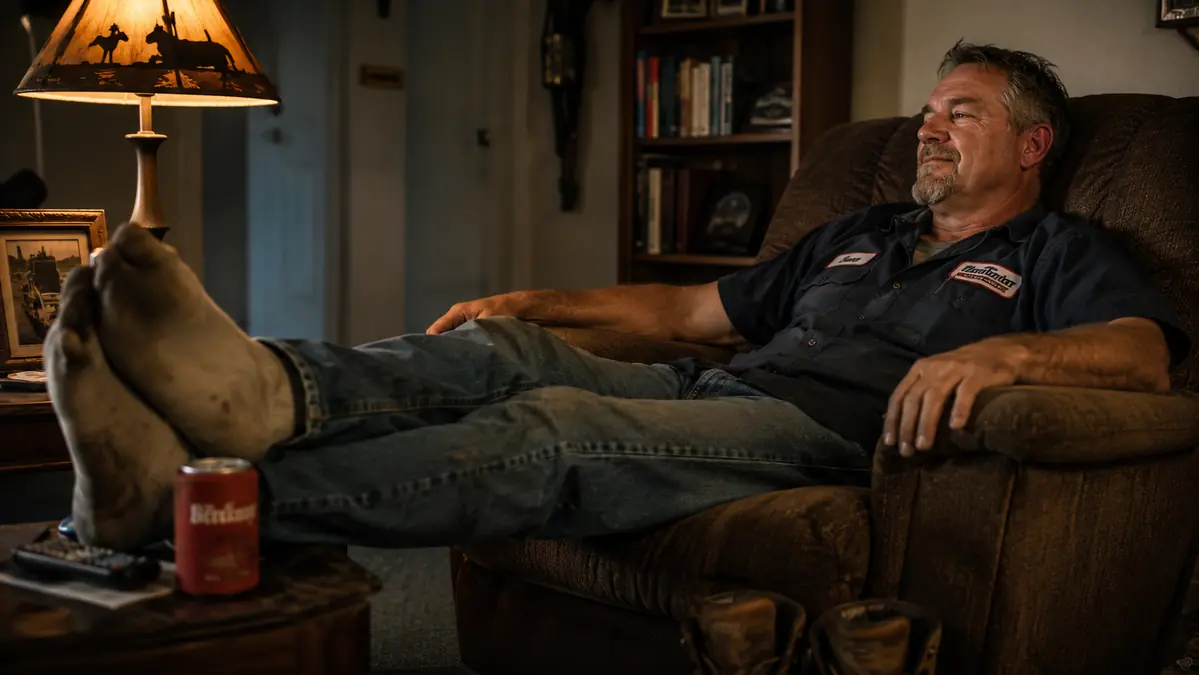
I stand on a concrete shop floor ten, sometimes twelve hours a day. Doesn't matter how good the boots are, by hour eight my feet feel like somebody's been hitting the bottoms of them with a rubber mallet. I'm 54, I've been turning wrenches since I was 19, and the plantar fasciitis in my right heel didn't show up until about four years ago, right around the time my wife passed and I started picking up extra shifts just to keep my head busy. Nobody tells you that grief lives in your feet too, but mine sure did.
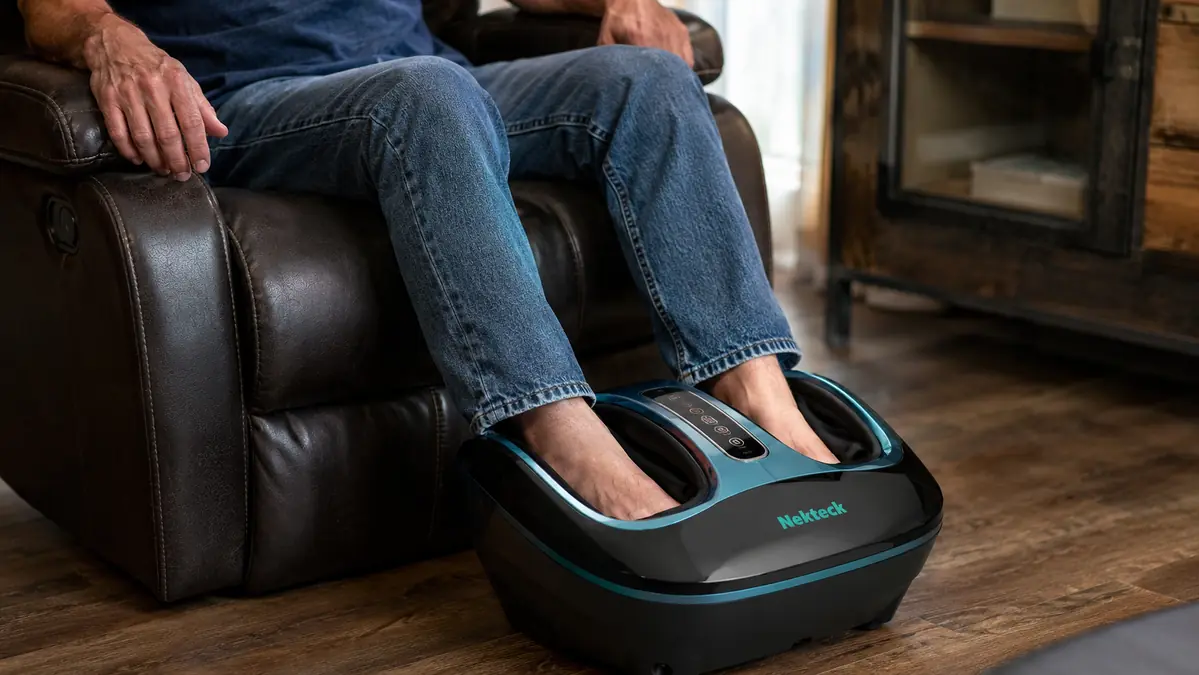
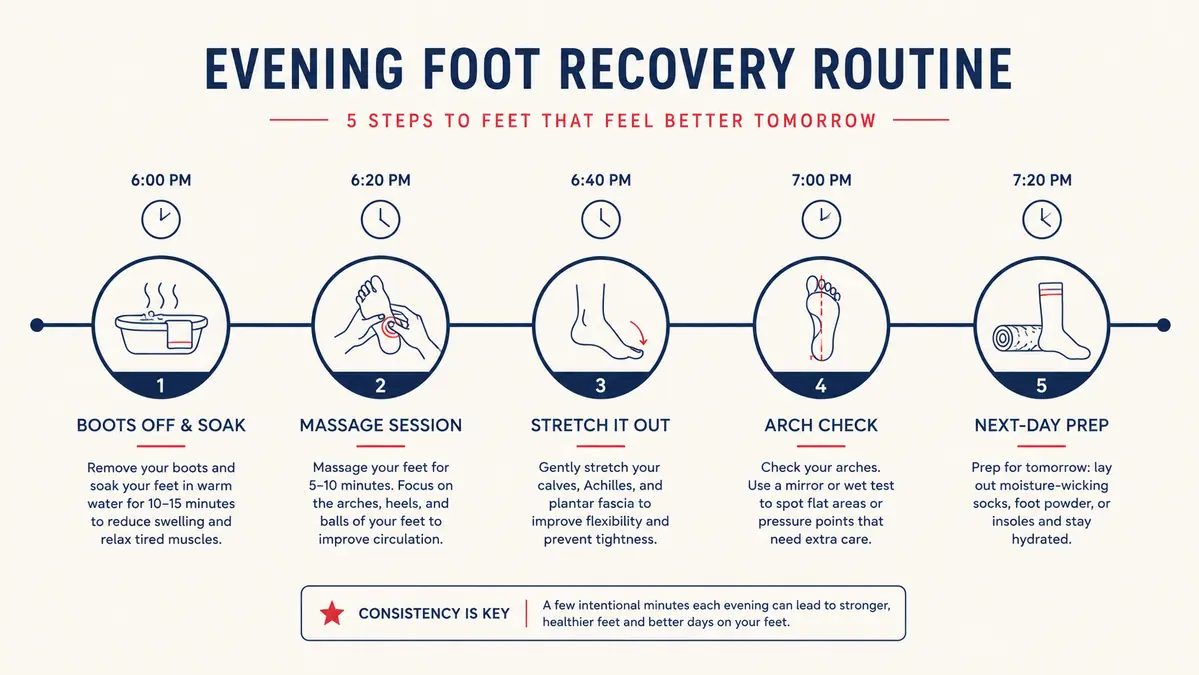
What follows isn't a doctor's pamphlet. It's the actual routine I run most nights, five steps, nothing fancy, using a Nekteck shiatsu foot massager with heat that I keep parked next to my recliner. I'll walk you through exactly what I do, what it fixed, and what it didn't, plus a section at the end on the other stuff that matters just as much as the massager itself.
Your feet earned a break today. Give them one.
The Nekteck shiatsu massager is the unit I use every night my heel starts barking before I've even finished dinner. Check today's price and current rating on Amazon before your next long shift.
Amazon Check Today's Price on Amazon →Step 1: Get the boots off and let your feet breathe before you do anything else
This sounds too simple to be a step, but it's the one guys skip. I used to walk in the door, drop onto the couch, and sit there in my work boots for another twenty or thirty minutes because I was too beat to bend down and untie them. That's a mistake. Your feet have been swelling all day inside a boot that isn't built to flex with them, and the sooner you get the pressure off, the sooner the swelling actually starts to go down instead of setting in overnight.
I make it the first thing I do, boots and socks off before I even grab a glass of water. I'll sit on the edge of the bed or a kitchen chair and just let my bare feet touch the cool floor for a minute. It's a small thing, but after four decades on concrete I've learned the small things add up when you do them every single day instead of once in a while.
While the boots are off I'll do a quick look-over, checking for hot spots, blisters, or any spot that's redder or warmer than the rest of the foot. Shop floors are unforgiving and I've stepped on more stray bolts and metal shavings than I can count. Catching a problem early beats discovering it three days later when it's turned into something that actually sidelines you.
Step 2: Run a real massage session, not just a five-minute rub
This is where the Nekteck comes in. I set it on the floor in front of my recliner, drop both feet into it, and let the shiatsu rollers and the heat work for a full fifteen-minute cycle. That's longer than most guys give it, but the first five minutes are just your feet getting used to the pressure, the real relief kicks in during the back half of the session once the muscles actually let go.
The heat function is the piece I didn't expect to matter as much as it does. Cold, tight muscles don't respond to kneading the same way warmed-up ones do. Once that heat's been on my arches for five or six minutes, the deep kneading rollers actually reach the tissue instead of just pressing against a tense, guarded foot. I run mine on the medium heat setting, high felt like too much after a day already spent sweating under a hood.
I focus most of the session on my right heel and arch since that's where the plantar fasciitis lives, but I don't ignore the left foot either. A lot of guys favor their bad side without realizing it, which just shifts the strain and starts a second problem on the other foot. I make myself sit through the full cycle on both feet even on nights when only one is screaming at me.
Step 3: Stretch the calf and arch while the tissue is still warm
Right after the massager shuts off is the best window you'll get all day to stretch, because the tissue is warm and loose instead of cold and guarded. I stand facing a wall, hands flat against it, and step one foot back with the heel pressed to the floor, holding for thirty seconds on each side. That calf stretch does more for plantar fasciitis than people give it credit for, tight calves pull on the fascia in the foot more than most guys realize.
After the calf stretch I'll sit down and roll my bare foot over a cold water bottle from the freezer for a couple minutes, alternating with the arch stretch where I grab my toes and gently pull them back toward my shin. It's a small, unglamorous move but it's the one that's kept my morning first-steps from feeling like walking on broken glass, which is exactly what untreated plantar fasciitis feels like the second your foot hits the floor.
I don't push into sharp pain during any of this. A stretch should feel like a pull, not a stab. If something's genuinely sharp, that's your body telling you to back off and maybe get it looked at instead of stretching through it, which is advice I give myself as much as anybody else.
One more move I picked up from a physical therapist my sister-in-law dragged me to see, the towel scrunch. I sit on the edge of the bed, lay a hand towel flat on the floor, and use my toes to scrunch it toward me, ten reps each foot. It looks ridiculous and it takes maybe ninety seconds, but it strengthens the small muscles in the arch that a massage alone doesn't touch, and those small muscles are what hold the arch up all day long.

Step 4: Check your insoles and boots before you blame your feet
I spent two years thinking my feet were just falling apart with age before a buddy at the shop pointed out my boot insoles were shot, flat as a pancake and offering zero support after eighteen months of daily wear. Swapping to a decent aftermarket insole with real arch support cut my end-of-shift pain nearly in half before I even added the massager routine on top of it.
Now I check my insoles every few months, pressing a thumb into the arch area to see if there's still any real cushion left or if it's compressed flat. Boots themselves wear out too, and a lot of guys keep wearing the same pair long after the support inside has broken down, because the outside leather still looks fine. The outside isn't the part doing the work.
I also picked up a cheap anti-fatigue mat for the spot in front of my workbench where I stand the most, the bay where I'm leaned over an engine for an hour at a stretch. It's maybe forty bucks and it took the edge off in a way I wasn't expecting from a piece of rubber. If your shop lets you put one down, it's worth asking, because standing on bare concrete for a decade straight is a big part of how guys end up with the foot problems I've got.
Step 5: Build the routine around consistency, not just the worst days
The mistake I made early on was only pulling out the massager on nights my feet were in real pain. That's backwards. The nights it helps most are the ordinary ones, the routine days where I keep the swelling and tightness from building up in the first place. Now I run the fifteen-minute session most nights, not just the bad ones, and the bad ones have gotten a lot less frequent because of it.
I keep it simple so I actually stick with it. Boots off, massager on while I watch whatever's on TV, calf stretch against the wall, insole check once a month scratched into a note on my phone. None of it takes more than twenty minutes total, and twenty minutes a night is nothing compared to what a bad foot costs you when you're standing on concrete for a living and can't afford to sit a shift out.
Some weeks I miss two or three nights because I'm too wiped out to do anything but eat and sleep, and I've stopped beating myself up over that. What matters is getting back to it the next night instead of letting a skipped session turn into a skipped week. Consistency over months is what actually changed how my feet feel, not any single perfect night.
What Else Helps
The massager and the stretching handle most of it, but a few other things matter just as much. I drink more water than I used to, because dehydration makes muscle cramping and tightness worse across the board, feet included. I also try to walk my two huskies, Diesel and Nova, most evenings, even if it's just a slow loop around the block. It sounds backwards to walk more when your feet already hurt, but gentle movement after the massage session keeps everything from stiffening back up while I sit still the rest of the night.
Weight matters too, and I'm not going to pretend it doesn't. Every extra pound is extra pressure through the arch with every step across a shift. I haven't dropped a ton, but the fifteen pounds I have lost since I started paying attention to this made a real difference in how my feet feel by hour ten. Same goes for socks, a good moisture-wicking pair beats the cheap cotton ones I wore for thirty years without thinking twice about it.
Sleep is the piece I ignored longest. For a couple years after my wife passed I wasn't sleeping much at all, and I noticed my feet felt worse on those stretches even when the workload hadn't changed. Once I started actually protecting seven hours a night, the tightness in the mornings backed off, and I don't think that's a coincidence. Tissue repairs itself while you're asleep, not while you're sitting up watching the shop channel at two in the morning.
The massager doesn't fix your feet by itself. It buys you twenty minutes to undo what ten hours on concrete did to them. What you do with the other twenty-three hours matters just as much.
Fifteen minutes a night is all this routine really takes.
If your feet are done by hour eight and your boots aren't the problem, the Nekteck shiatsu massager is the tool I'd hand a buddy standing in the same spot I am. Check today's price and current rating on Amazon and see for yourself.
Amazon Check Today's Price on Amazon →